Showing posts with label islam. Show all posts

13.6.16

#SacredEarth2016 through the Ramadanoscope


The Earthquake ( Chapter 99)

When the earth is shaken with her shaking,
and the earth yield's up her burdens,
and humanity says, "What ails her?'
That Day she shall convey her chronicles;
for thy Lord inspired her.
That Day humankind shall issue forth upon diverse paths to witness their deeds.
So whosoever does a mote's weight of good shall see it.
And whosoever does a mote's weight of evil shall see it.


Here, the Qur'an speaks about the Day of Judgement and Accountability, detailing the Earth herself as an ultra high resolution, female, divinely inspired, live, witness of human deeds. Personally this is an epic chapter to me. Muslims prostrate their heads upon her surface more than 40 times every day, in recognition of the vertical relationship between humanity and The Most High. In another sense, it is an expression of solidarity and horizontal relations with the rest of creation.


12 June 2016 was "Sacred Earth Day of Prayer and Action for People and the Planet", a mobilisation of more-than-material ecological remembrance and embodiment #sacredearth2016. A coalition of religious formations, catalysed mainly by OurVoices, the idea is to compel power holders to commit to deeper global climate safety by building a practical and moral movement.  Over one hundred official events were scheduled all over the world which makes my heart smile.


Sacred Earth Day marked 6 months since the UN Climate Change talks in Paris, and arguably more inspiringly Yeb Sano and company's People's Pilgrimage. It has been about a year since the Roman Catholic Pope Francis published his AWESOME treatise on Socio-Climatic Justice, and the moving Multifaith Convergence on Rome organised by the Greenfaith team that connected Christianities, Hindu, Sikh, Jewish, Buddhist and Muslim environmentally curious, conscious and activisty types.

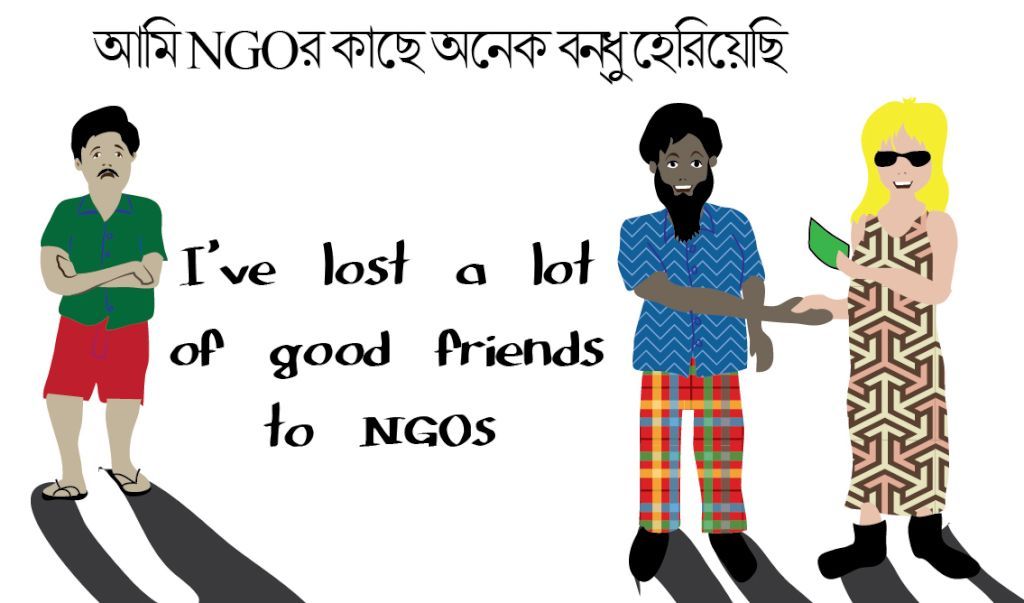
Yes, developmentia, coloniality and NGOisation are real, but that cannot overwhelm the sincerity and beauty of bringing action-orientated spirituality's together in convergence for climate justice.

The Ramadanoscope

As it is the month of Qur'anic revelation, Ramadan, there is another ocean of meaning through which Muslims and friends can access the Sacred Earth, without intermediaries or gatekeepers, calendars or colanders. All over the globe we attempt to organise our individual, and communal lives to attain greater piety through acts of devotion, particularly fasting. Though the daylight food cessation element gets a lot of the airplay, it is the spiritual struggle, of attaining excellence in behaviour and journeying through the Qur'an, that is the fundamental purpose of this month.

O you who believe!
Fasting is prescribed for you, 
as it was prescribed for those before you, 
That you may learn piety. (Chapter 2 Verse 183)

Islamic scholars have written about this month's movement for centuries, here's Maulana Rumi on the spiritual richness and empowerment of fasting.

There’s hidden sweetness in the stomach’s emptiness.
We are lutes, no more, no less. 

If the soundbox is stuffed full of anything, no music.
If the brain and belly are burning clean with fasting, 
every moment a new song comes out of the fire.
The fog clears, and new energy makes you
run up the steps in front of you.

Be emptier and cry like reed instruments cry.
Emptier, write secrets with the reed pen.
When you’re full of food and drink, 
Satan sits where your spirit should, 
an ugly metal statue in place of the Kaaba. 
When you fast,
good habits gather like friends who want to help.

Fasting is Solomon’s ring. 
Don’t give in to some illusion and lose your power,
but even if you have, if you’ve lost all will and control,
they come back when you fast, like soldiers appearing
out of the ground, pennants flying above them.
A table descends to your tents, Jesus’ table.
Expect to see it, when you fast, this table
spread with other food, better than the broth of cabbages.

By Jelaluddin Rumi


This year the poet Daniel Hayy-Moore returned to his Lord, his work is published in books and featured in text and spoken form on www.ecstaticexchange.com and Ramadan is a major theme and inspiration for his poetry.

First Night of Ramadan

A single stone is thrown in

and the canyon resounds with the
hallelujahs of angels

A single breath contains the
known and unknown universes

Back behind edgeless
space are motions that

vibrate the heart

Back behind ancient mountains and
historical intricacies

a shadow gives way to Light that has a
door in it to

let us through

We take no step that
doesn’t bring us nearer

One sip and the oceans disappear

One glance and the skies
bend closer to hear our

emptiness

One heart-wrench elegant elevation
and we’re on a

plateau tossing a stone in the dark
that never stops echoing


Being the words

The social sphere is an integral to enabling and sustaining transformations, and thats what the relatively small official Muslim participation in Sacred Earth 2016 is getting at.  For example, yesterday in Zinj, Bahrain, women gathered to launch their own Sacred Earth initiative and toolkit to drive ecoakhlaq ( practical ecological ethics) back into local Ramadan practices of consumption and waste reduction. Meanwhile, Indonesians have been organising large Zero Waste Green Iftars sunset breakfasts), which sounds like a lot of washing up. Back in the UK of A and the NGO MADE have a short blog post that touches on coffee, vegetarianism, drinking tap water, gardening and eating greens.

Its hardly the green and golden age of eco Islam out there, for all number of unsatisfying reasons. However a lot of people have their ears open and dialogue is widening. There are some real jewels if you spend some time panning, for example a series of 20+ programmes from Iqraa TV channel called Repairing the Earth by Rhamis Kent.


Fasting not Feasting was a series of practical reminders, like Flashmob Iftars and Tarawih prayers with Trees,  that continues to run through Ramadan life, pushing a socio-ecological solidarity and counter-consumer culture. Its 2010 website is still online and hosts resources that you might find a use for in family and community life.
Outdoor praying and Iftar picnics are becoming more common in the diasporic west, for pro Creation Relations reasons as well as racist ones (yes that's you Davis).  And as a consequence, the opportunities to connect and commit to Islamic and civic eco-political-ethical trajectories will multiply.  On the other hand, sole focus on personal and community resource austerity measures and lifestyle issues risks that eco Islam becomes yet another depoliticisation in our Age of Preventitude. I've seen a lot of this in the NGO discourse.

But, by connecting the spheres with decolonial tunnelling, accepting that climate change is fundamentally a problem of coloniality, I believe we can maintain integrity between our teachings, historical communities and futures. Just like they do in the People's Republic of Duriana.

Save the Dates

There are a few advanced notice events worth considering for the diary, thanks to various Muslim Scounts groups there is an action-packed  'Iftar under the Stars' in Luton next Saturday ( 18th) and in Chingford a week after that( 25th). A few weeks after Eid sees the return of the Willowbrook Arts and Music Festival (23/24th July).

Manajat

Wandering through your Beautiful Names, I call on You Al Mani', The Preventer of Harm, to make the pathways to protecting people easy for us, whether that is indigenous delta engineering in Bangladesh, social protection policies or the realisation of the rights of migrants and refugees. I call on You Al Matin, The Powerful, to empower the oppressed to voice and make their way in this world. I call on You Al Jabbar, The Compeller, to open the hearts and minds of climate tyrants, witting or unwitting, to realising a decolonial climate justice. Oh Al Musawwir, The Shaper of Beauty, assemble the courageous into an excellent movement, across your creation to restore balance, dignity and justice. Oh Ar Rashid, The Righteous Teacher, teach us how to speak with animals and plants, give our sciences life not neoliberal death.

21.8.15

Jumma Mubarak and Reflections on the Islamic Climate Declaration

Who said the Art of Shadow Puppetry was dead?
Earlier this week, several mainly western NGOs held an event in Istanbul to develop and launch a joint, Islamic declaration on Climate Change.

I previewed it here.

The webcasts of the gathering were quite difficult to make any sense of, but the corporate communications teams have been busy and successful in messaging the symposium into the mainstream media. To be fair, many people just want a good news story about Muslims, and this air conditioned NGO theatre provides that.

Insofar as it is a confusing distraction from reality, the Islamic Climate Change Declaration functions in the same way as a few score people taking a well publicised Climate Change themed Dump on the Ummah, in order to attract Development Dung Beetles.

This is our Inconvenient Truth

Mistakeholding onto the rope of Allah

I have spent some time raising money and investing in one of the organisations (IR), watching it squander its human resources and grow to embody neoliberalistan, even while helping many people at the same time. It is not that I disagree with Islamic Relief's right to exist unharrassed, but it is important not to foul up the waters for others, blag your way through seriously complex issues and assume the role of a misleading gatekeeper. This is basic ummahtic adab.

It must be hard, being an Islamic Muslim NGO in such an Islamophobic, securitising and secularising environment, but it is harder if you are a street kid in Dhaka trying to survive to the next day without a policeman raping you, or a family in Khyber Pakhtoonkhwa trying not to get drone bombed or massacred, perplexed that these UK brothers are patronising you with DFIDy climate adaptation hush money.

Pardon the spelling. [Credit: MTA]
Organisational work in the world is fraught with contradictions and it is harder to stand back and peel away when you find yourself in the position of believing that you are helping Muslims as part of your rizq ( Divine worldly provision). I don't think this malaise is particular to the Muslim experience, it just sucks because its mine.

The Story of The Whistling Lion

The turning point came for me regarding IR came when the organisation spazzed out a few years back over Assed Baig's exposure of a betrayal of mission to relieve people in Somalia. It came just after the scandal at the London-based Muslim Youth Helpline, where the leadership used the extremist card to cover its own incompetence, and subjected its victims, who were unpaid volunteers, to lawfare. On the face of it, IR is a less precarious an organisation than MYH, with much more support and understanding from the Muslim community, so one would have hoped they would have responded more wholesomely.

In my generally inconsequential judgement, instead of admitting fault, they went on a character assassination rampage, suggesting that their corporate image was far too important to them, and that they were not to be mistaken for the selfless inspiration of the Edhi Foundation and the urban justice martyr Parween Rehman of the Orangi Pilot Project. Kudos to it IRs founder Dr Hany for all he did, and all the sincere stuff they have got right over the years, but we do need different vehicles now, and for old vehicles to transform.

#LearningFromFailureMatters
The trustees, individual donors, staff and management still need to reflect on Relief-gate and avoid believing their own and their sector's BS. Why do we lionise the Chelsea Manning's and Edward Snowden's and flame our own truth sayers? Because its hard that's why.

Perhaps self-preservation might provide better motivation. There are actually malevolent actors out there collecting evidence to screw Muslim organisations when the time suits them. Can folks learn what the ex Mayor of Tower Hamlets Lutfur Rahman and company failed to?

Another thing that Relief-gate casts doubt on is the competence of airdropped and 'embedded' observers of development(ia) "field" work to understand what is unfolding before their eyes "on the ground". We could say that Nabi Khidr taught Nabi Musa this vital lesson.

This is why it is difficult for some, if not many, people to take IR's climate stuff at face value, despite the many lovely humans, barakah and sincerity that inhabits the place.


Back to the Declaration

Formatting facepalm
The text, when it came, was strewn with crucifix's, as if to convey a mystical sense about its inspiration and audience.

Another alarm bell rings when you search for the word justice and you only get the job title of the Lutheran participant.

1400 years of Islamic scholarship, coloniality, white supremacy and reparations were neither invoked nor addressed, lending the proceedings the odour of the vacuous tokenism that characterises this sector.

Enter The Corporate Nafs

The thing about developmentia, which is an inhibitor of our decolonisation so far, is that its so blatantly expressed in public communications.

On the promotional video reel --> , notice how the actual environmentalist, Fazlun Khalid, is featured hurriedly in order to make way for the IR advert for incorporation into the (white) world of  institutional donors.

I couldn't help but dwell on the exclusion of Black voice and the violation of the BDS campaign. And no, its not a petty operational oversight, its actually how this perverted theatre works, through us, to reproduce itself before we even clear our throats.

Its worth bearing in mind that,
  • A 2 degree average temperature rise across the globe will probably cook Africa by 4. 
  • The body of Black Liberation theology is a critical dialogue partner for the Muslims, 500 years plus downstream from 1492 and worse.
  • Current levels of global Negrophobia and Islamophobia amongst humanity suggest that Climate Refugee 'Concentration Camps' in the future are a real possibility. 
  • The spiritual reality of the batin and the zahir, the internal and the external plays out here. It is the turmoil inside some very powerful people has created this institutional, racist climate violence.

Reading the Text

The declaration text was a slight improvement on the draft, which was overly focused on Mitigation and European climate agenda. For a start, Adaptation to climate impacts featured (once). Some of the technical terms were defined  ( through they were unnecessary) and the diversity of the Muslim Ummah's experience of the impacts and contributions of climate change was acknowledged.

Happily though Islam does really shine through sometimes, despite the clunkiness and slapdash composition of the document which still gets bogged down in bullet points.

That triplet of Allah's name's is always going to be inspiring,  Al Khaliq, Al Bari, Al Mussawir - The Creator, The One Who Creates Out Of Nothing,  The Bestower Of Forms.

For the intellectually and spiritually underwhelmed
If you are looking for something a bit deeper, and mistook the stunt for something serious, I'd recommend the Ecology and Environment chapter of Tariq Ramadan's 2009 Radical Reform for a coherent, enlivening and practical read, and all of Seyyed Hossain Nasr's writings and lectures on the topic since the 60s. For creative depth and an idea of what could have been and could still be, there is always The Brethren of Purity's spiritual fiction novel The Case of the Aminals Versus Mankind before the King of the Jinn from the third Century of Islam.

GMOs and The Rights of Creation
One of my major beefs regarding the Istanbul Declaration is that it does not speak directly about Genetic Modified Organisms, which are and will continue to be foisted upon vulnerable societies as a Climate Solution. Farmers in Bangladesh and other places could do with a hand resisting this stuff, as their governments will kill them if they legitimately protest like UK groups do.

Our critique can be spiritual and jurisprudential as well as based on the malevolent corporate intention and health risk arguments. Other Muslim voices have stressed that our Rights of Creation discourse resonates with the Rights of Nature idea from the 2010 Cochabamba Declaration. Although the rights of ants to undisturbed habitation was affirmed in Istanbul, the Rights of Creation discourse wasn't developed enough. It has fascinating legal and scientific implication that I hear the People's Republic of Duriana have been exploring.


MSM Coverage
The coverage of the event has almost entirely been in 'the west', and its interesting to see how different agencies interpret it. Many are picking up on the total decarbonisation line, which apparently makes it strong. The twitter hashtag(firullah) is #Muslims4Climate

Ummahtic Tumbleweed.
Meanwhile I don't think anybody in the Muslim majority countries noticed. But what even if they did?

One question I haven't seen addressed is that often the civil society gangsters in such countries don't really like Islam, so nonsecular work is dismissed and denigrated to the point of hamstringing institutions, scholarship, dehumanising people and massacring them. This is very much the case in Bangladesh at present and gives a sadistic comedy value to Adaptation, Development and Disaster Risk Reduction there.

So What Now?
What I would like to see happening is not a bunch of western Muslim NGOs acting as UN Climate subcontractors, and getting their mates to retweet, but political and epistemic movement. One of the prerequisite of transformative adaptation that Tariq Ramadan points out is "The full and equal integration of all available knowledge".

We cannot really afford for the next generation of Muslim activists, scholars and political movements not to have a decolonial ecopolitics.

I believe that the next climate theatre is taking place in Paris, Oh Allah you have such a rich sense of irony.

30.1.14

Lecture by Farid Esack on "Islam and Ethics"

As we live in dark and challenging times, its important to drink from better fountains, this is one of those.


Farid Esack on "Islam and Ethics" at George Mason University from Ali Vural Ak Center for Global I on Vimeo.
“Islamic Ethics and Decolonialization - From the Certainties of Ma’ruf and Munkar to the Uncertainties of Post-this and Post-that”

The Qur’an seemingly postulates the idea of a clearly defined good based on widely accepted and acceptable knowables or knowns (ma’ruf) pitted against evil (munkar). These ethical distinctions are also reflected in the Muslim historiographical framing of pre-Islamic Arabia as ‘jahilliyyah’ (arrogant ignorance) against the light of islam/Islam. Dr. Esack reflects on these binaries in the light of the heurism and uncertainties offered by contemporary approaches to ethics. In this talk, he offers a decolonialized perspective as a response to the challenges posed by the seeming certainty of Islamic ethics by considering the urgencies (and the certainties) of the Muslim peripheries (even as these - both Muslims and the peripheries - may themselves be ever-changing).

Farid Esack is a South African scholar of Islam who completed the Darsi Nizami, the traditional Islamic Studies program, in Madrasahs in Karachi, Pakistan. He did his PhD at the University of Birmingham (UK) and subsequently did some post-doctoral work on Biblical Hermeneutics at the Philosophisch Theologische Hochschule, Sankt Georgen in Frankfurt-am-Main.

He is the author of several publications including Qur’an, Liberation & Pluralism: An Islamic Perspective of Interreligious Solidarity Against Oppression, On Being a Muslim: Finding a Religious Path in the World Today and An Introduction to the Qur’an (all by Oxford: Oneworld). His current major field of interest and commitment is Islam and AIDS. He is the author of a series of publications dealing with this area including Islam, HIV & AIDS – Reflections Based on Compassion, Responsibility and Justice. He also co-edited “Islam and AIDS – Between Scorn, Pity and Justice", with Sarah Chiddy. He has also published widely on Islam, Gender, Liberation Theology, Inter-faith Relations, Religion & Identity and Qur'anic Hermeneutics.

Part of the Spring Lecture Series on Islamic Ethics

Recorded on April 25, 2013

8.5.13

Resource Page on Dhaka Massacre

A terrible sorrowful atrocity has occurred in Bangladesh.  It is being covered up so I'm putting together this resource page to make a stable reference point.

There was a massacre of religious protesters at 245am Sunday 5th May around the Water Lily statue in Motijeel, Dhaka's business district.  Massive force was used, 10 000 personnel, a whole range of weaponry and darkness.

The deed was committed by a mixture of armed forces: the Bangladesh Police, the Bangladesh Border Guards and the Rapid Action Battalion, which is notorious for 'crossfire'. For the record, the Border Guards have a grisly history, they mutinied a few years ago killing many officers and their families. There will also have been involvement from armed Awami League aligned thugs, like Sohel Rana, whose building collapse killed more than 600 people so recently.


Documents
Here is an article from The Khichuri contextualising the massacre, an alert from the Asian Human Rights Commission and a report from Bangladesh Human Rights organisation Odhikar that details the press control and carting away of bodies.

These articles probably appeal to those with time and inclination to read. They may have appeal to nerds like me, and hopefully institutions out there in the world, but in these fast times of facebook timelines and skepticism documentary images have a grounding role to play.
Like. Share. RT. Forward.

Pictures
If you have a Flickr account Feb28.com have a picture library here. This group came into being following an earlier government killing spree. Know that there is danger in looking at these with a heart that yearns for The Spectacle, The Numbers Game and The Competition of Cruelties. These are humans, and what remains, they are sacred and having a sense of the sacred resists the commodification of suffering that neo-liberal capitalism drives. I believe these are innocent men killed in the act of protest against a hegemonic and morally bankrupt regime. It is staggering, that many Bangladeshis, like those on the Blogger and Online Activist Network are still at the point of arguing that these kinds images are all photo shopped, fake and conspiratorial. But think about the dominant national indoctrination processes and narrow historical spoon feeds and it makes more sense.

Pictures tell us a frozen snapshot, whereas human stories go right into us.


Videos
In the video below, a taxi driver secretly films a policeman involved in the massacre, the policeman describes his view and when the driver asks him if he feels bad, he expresses no remorse. I pray for the safety of this taxi driver.


Sometimes people want to hear someone like them tell them the story. In this video log from Dhaka Medical Hospital, A north American development worker,  not known for holding sympathies with 'Muslim extremists' bravely puts his life on the line to report on the dead and the dying.


In the last video there are no people, just their blood stains. Lord grant them healing, high station and forgiveness, make us better protection for each other.


So, why is this happening and why isn't anybody doing reporting anything?

This didn't come out of the blue, we saw it coming but the Shahbag spectacle over the past few months was a successful diversion of energy. The government has been arresting non compliant media  heads for some time. (Mir Quasem, Mahmudur RAhman). Shortly after the killing spree, the UK-trained Rapid Action Battalion seized the transmitters and shut down Diganta TV and Islamic TV. 

The international media is appalling, and embarrassingly it is secular liberal gatekeepers of Bangladeshi origin are falsely spinning this story in the BBC (Sabir Mustafa) and Aljazeera (@ShamiminLondon).  Just enough to secure indifference for brown men with beards far away who dont play liberal.

From facebook I learn that much of the  Dhaka urban middle class is in denial. There is a tendency to turn this into a commodified spectacle of numbers and heart crushing imagery of human savagery.  The Shahbag aligned have decided that the massacre is all about denying their movement and are acting accordingly. The most prominent facebook group detailing the atrocity, Basher Kellah, is inspired by the Bamboo Fort of Titu Mir, the political-religious reformer who battled landlords and colonialism. It is in dire need of an editorial policy. To be a foolish friend is sometimes worse than being an enemy.

From my point of view I find confirmation that the secular liberal intelligentsia's hegemony is a big, deadly problem. I hope others can see this. Some say they want evidence and without evidence they can't do anything. Sadly, they do not require such evidence when accusing Islamists of heinous crimes with no proper investigation. Crookery, like selective humanitarianism, is rife, especially in the Daily Star, the new Dhaka Tribune, and the Ain o Salish Kendro human rights group.

I call on junior journalists to revolt and leak like Bradley Manning did.

What saddens me even more is how these alien powers in the capital do not regard the religious protesters as proper human beings, have misframed them and their demands, dehumanised them and made it possible for the government to brush-fire them while they prayed and slept in the dark

Some say that Hasina Wajed's government could not have done this without outside approval, and maybe India, USA and/or the UK had some role in this murderous foolishness. After the last coup I wouldn't be surprised. Yet the fact remains that the primary political control rod rests with us, the Bangladeshis, whatever that means anymore.

What shall be done?
  1. Learn how to argue uphill against both brown and white prejudices
  2. Help spread the story, out of respect those who wont be returning to their homes and families and people in future
  3. Engage Awami League School forces in principled debate with superior information and argument.
  4. Lobby elected representatives
  5. Contest unfair reporting
  6. Call out intellectual crooks who infantalise and mislead our people.
  7. Think carefully and creatively about what to do next
  8. Do not allow Hasina, Foreign Minister Dipu Moni,  Home Minister Alamgir and company to travel the world without meeting protest.
  9. Prevent desperate Bangladeshi MPs from looting public resources in the last days of their government through their diplomatic privileges.

8.4.13

Secularism and Relation between Religion and the State from the Perspective of the Nahdha Party by Rached Ghannouchi


Source: Facebook

Full Transcript of Rached Ghannouchi’s lecture on Secularism – 2 March 2012

Mr. Rached Ghannouchi, President of the Nahdha Party in Tunisia, gave an important and historic lecture at CSID-Tunisia last Friday, March 2nd, on « Secularism and Relation between Religion and the State from the Perspective of the Nahdha Party », which was then followed by a frank and open debate with leading scholars, activists, civil society leaders, and politicians from accross the full spectrum, as well as representatives of the Moroccan, Algerian, Egyptian, and American diplomatic missions.

The audience also included the Head of the Constituent Assembly Mustapha Ben Ja’afar, President of ALESCO Muhammad Al-’Aziz Ibn ‘Ashour, the Head of the Higher Committee for Human Rights and Fundamental Freedoms in Tunisia Noureddine Hachad, as well as the leaders of various political Parties such as Muhammad Goumani, Abd Al-Wahhab Al-Hani, Murad Ruissi, Muhammad Busairi Bouabdelli, and Khaled Traouli.

Transcript of Rached Ghannouchi’s speech:

In the name of God, prayers and peace be upon His Messenger, his household, companions, and supporters.

Ladies and gentlemen, brothers and sisters may God’s peace and blessings be upon you.

I thank the Centre for the Study of Islam and Democracy for giving me the opportunity this evening to speak to this distinguished elite of Tunisian men and women and those coming from abroad. I am not here to teach you anything, since the subject we are here to discuss has no set instructions to be delivered but rather only points of view to be deepened and efforts to reach a common ground that would enable our elite to reach a consensus or at least a quasi-consensus.

Our topic is quite problematic in the sense that it deals with the Islam’s relationship to secularism. Is this relationship one of conflict and discord or one of harmony and overlap? Related to this question are issues such as Islam’s relationship to governance, the relation between Islam and Law, which are all contentious matters.

It seems that when we speak of secularism and Islam, as if we are talking about evident and clear concepts. However, a non-negligible amount of ambiguity and multiplicity of understandings surround these concepts, in that we are not talking about ‘a’ secularism but rather a multitude of secularisms as is the case with Islam, by virtue of what is proposed in the arena, we are faced with various understandings of what it means.

Although secularism seems as if it was a philosophy and the fruit of philosophical reflections and meditations which came to fight idealist and religious outlooks, it is not so. Secularism appeared, evolved, and crystallized in the West as procedural solutions, and not as a philosophy or theory of existence, to problems that had been posed in the European context. Most of these problems emerged following the Protestant split in the West, which tore apart the consensus that had been dominant in the Catholic Church, and imposed the religious wars in the 16th and 17th century. It was thus that Secularism and/or secularization began.

This leads us to ask the following question: are we in need of secularism in its procedural aspect? Perhaps the most important idea in the ensemble of these procedures is the idea of the state’s neutrality i.e. towards religions and its abstention from interfering with people’s consciences. Whereas, the state’s scope or jurisdiction is limited to the ‘Public Domain’, religion’s scope extends to the ‘Private’. In the United States religious interference in the public domain is evident, despite the differentiation that exists there remains a significant religious influence. Their leaders’ speeches are laden with religious content and references, and religion is debated in all electoral campaigns where it manifests itself in issues such as prayer in schools and abortion. This in reality is due to the fact that America was founded by evangelical pilgrims fleeing with their religion from the Catholic Church’s persecution in Europe. It is for this reason that the U.S. is looked at as the Promised Land, the land of dreams mentioned in the Torah and Gospels.

As the Franco-American thinker Tocqueville once remarked that the Church is the most powerful party in the United States. This is by virtue of the huge influence that it enjoys, though this is not the case in Europe. Whereas the number of those who can lead prayer in the US exceeds 50%, in Europe it does not reach 5%.

In the European context, also, there are differences in the state’s relationship with religion between the French heritage and Anglo-Saxon one, whereby in the UK the Queen combines the temporal and the religious powers. The complete separation is the one that is associated with the French experience, which resulted from the clashes that took place in French history between the revolutionaries’ state and the Catholic Church. Even in Europe, therefore, we are not dealing with one experience in secularism, perhaps for our purposes, since our elite is influenced by the particular French perspective (particular even for Europeans) where religion is totally excluded from the public sphere and the state considers itself as the sole guardian of national identity. This exclusion of the religious and its symbols from the public domain is what lead France to be the only country that refused the covering of heads for Muslim women, while we don’t see such a crisis in any other European country over the issue of headscarves. This is exclusively due to the particular nature of the relationship between state and religion in France which was the result of a particular historical experience.

We in turn are not faced with one understanding; perhaps the most important procedure invented by the secular worldview on this level is the state’s neutrality. In other words, the state is the guarantor of all freedoms be them religious, political or otherwise. And the state should not interfere in favor of this or that party. We pose the following question now: Is Islam in need of such a procedure? i.e. the state’s neutrality towards the various religions.

Islam, since its inception, has always combined religion with politics, religion and state. The Prophet (peace be upon him) was the founder of the religion as well as the state. The first pledge of allegiance made by the group of Madina who came to Mecca was a religious pledge to believe in Allah and his Messenger. But the second pledge was to protect the Muslims, even by sword, should al-Madina be attacked. Al-Madina, and this expression is of the utmost importance, used to be called Yathrib before becoming Al-Madina (The City) which implies that Islam is not merely a religion but also carries a civilizational meaning. It is a transferring of people from Bedouin life to urban/civilizational life. This is why ‘Bedouinization’ was considered a great sin once urbanization had been achieved. No wonder then that wherever Islam went it established cities and our country hosts the oldest city built by Arabs in North Africa. Therefore, The City founded by the Prophet (pbuh) is a clear indication that Islam is a religion of civilization, whereby it shifted those warring tribes from a Bedouin level to a civilized one and united them around a state.

The Prophet (pbuh) was a an imam in the religious sense as he lead prayers in mosques, and at the same time a political imam that arbitrated people’s disputes, lead armies, and signed various accords and treaties. Of relevance to us is the fact that upon his arrival to Medina he established a mosque and put in place a constitution that was called Al-Sahifah. You have precedents here Mustapha! [In reference to Mr Mustapha Ben Ja'afar, President of the Constituent Assembly, who was present in the audience]. This Sahifah, which is one of the oldest constitutions in the world, contained a bundle of covenants regulating the relations between Meccan immigrants and their hosts (these were considered as one nation) and the Jewish tribes of Madina (also considered a nation). Al-Sahifa considered these two religious nations as comprising one political nation and entity that is distinct from others. The most important concept offered by such scholars as Muhammad Salim Al ‘Awwa and Muhammad ‘Umar is the distinction between the religious and the political as corresponding to the separation between state and religion.

The distinction between that which is political and that which is religious is clear in the Sahifah in that Muslims are a religious nation (ummah) and the Jews another, but the combination of the two plus other polytheists made up a nation in the political sense. This distinction can be witnessed in the Prophet’s dealings even if the boundaries were not always clear. Whereas the religious is the sphere of observance and obligation, the political is the sphere of reason and Ijtihad. At times when the ambiguity confused the companions, they would ask the Prophet (pbuh) whether this is divine revelation (wahy) or a mere opinion. In the case of the former they would obey, and when it is the latter they may differ and offer alternatives. On more than one occasion did the companions differ with the Prophet (pbuh) in his capacity as the head of state, and Sheikh Tahar Ben Ashour has dealt in detail with the topic of what he called ‘Prophetic Statuses’.

One day the Prophet (pbuh) passed by a group in Medina cross-pollinating palm trees and said: ‘I do not see the benefit of doing so.’ The Medinan people thought that that was divine revelation and stopped treating their trees which made their harvest of that year of a lesser quality. They asked him why he ordered them to do so, and he replied: you are best placed to know what is beneficial for you in your worldly affaires. Therefore, it is not the duty of religion to teach us agricultural, industrial or even governing techniques, because reason is qualified to reach these truths through the accumulation of experiences. The role of religion, however, is to answer the big question for us, those relating to our existence, origins, destiny, and the purpose for which we were created, and to provide us with a system of values and principles that would guide our thinking, behaviour, and the regulations of the state to which we aspire.

So, Islam since its inception and throughout its history has not known this separation between state and religion in the sense of excluding religion from public life. And Muslims, to this day, have been influenced by Islam and inspired by its teachings and guidance in their civic life, with the distinction remaining clear. This distinction between the religious and the political is also clear in the thought of Islamic scholars/jurists. They have distinguished between the system of transactions/dealings (Mu’amalat) and that of worship (‘Ibadat). Whereas the latter is the domain of constancy and observance i.e. reason cannot reach the truth, the former is the domain of searching for the general interest, for Islam came to realize people’s interests as confirmed by such great jurists as Al-Shatibi and Ibn ‘Ashour. These scholars have agreed that the highest objective of all divine messages is to establish justice and realize people’s interests, and this is done through the use of reason in light of the guidelines, objectives, values, and principles provided by religion. Thus, there is a domain of transactions/dealings which is constantly evolving and represents the sphere of variables, and there is the domain of creed, values, and virtues which represents the sphere of constants.

Throughout Islamic history, the state has always been influenced by Islam in one way or another in its practices, and its laws were legislated for in light of the Islamic values as understood at that particular time and place. Despite this, states remained Islamic not in the sense that their laws and procedures were divinely revealed, but that they were human endeavours open to challenge and criticism. States have also practiced a degree of neutrality, and when they tried to interfere and impose one understanding on Muslims, as happened in the Abbasids state, it sparked revolution. It is mentioned that al-Mansour had become concerned with the multitude of religious views and interpretations emanating from the same religion and feared their divisive effect on the state. So he sent for Imam Malik and asked him to amalgamate all these in one to unify people’s outlooks. Imam Malik produced his famous book al-Muwatta’, with which al-Mansour was greatly pleased and wanted it to become a law that binds all Muslims. This horrified Imam Malik and asked for it not to be made so, because the Prophet’s companions have travelled to different lands and took with them much knowledge, so allow people to choose what they see fit. This is why we see that one school of thought is dominant in the Maghreb, while another is so in the Levant, and yet another in Egypt…etc

It is due to the absence of a church in Islam that what remains is the freedom of thought and interpretation. This will naturally lead to a diversity in interpretation, and there is no harm in that except when we need to legislate, at which time we are in need of a mechanism, and the best mechanism that mankind has come up with is the electoral and democratic one which produces representatives of the nation and makes these interpretations a collective as opposed to an individual effort. Again, in the absence of a church representing the sacred on earth and a spokesperson of the Qur’an, the nation is the only manifestation of divine will through its interactions and not any particular scholar, party, or state.

When al-Ma’moun (Abbassid Caliph) wanted to impose one interpretation of the Quran and one particular understanding of Islamic creed (that of the Mu’tazili school), Imam Ahmed Ibn Hanbal revolted and refused the state’s attempt to dominate religion. This lead to him being persecuted and tortured, but in the end he managed to turn public opinion against the state and force al-Ma’moun to cede.

While the problematique in the west revolved around ways of liberating the state from religion and lead to destructive wars, in our context the problem is one of liberating religion from the state and preventing it from dominating religion, and keeping the latter in the societal realm, open to all Muslims to read the Qur’an and understand it in the manner that they deem appropriate, and that there is no harm in the plurality that is combined with tolerance. But should Muslims be in need of laws, the democratic mechanism is the best embodiment of the Shura (consultation) value in Islam.

It is of the utmost importance that our heritage is devoid of a church. Maybe only our Shi’ah brothers hold the belief in a religious institution, but in the Sunni world there is no such a thing save for a council of scholars which are usually in disagreement and hold different views. For this reason, we are in need of scholars and intellectuals to debate and study our issues in a climate of freedom and accept that the legislative institution is the ultimate authority by virtue of being elected.

There is a debate that is currently ongoing in our country between secular currents which may be described as extremist and Islamist ones which may be described in like manner. One would like to impose their understanding of Islam from above using state tools and apparatuses and the other aspires to strip the state, educational curricula, and national culture of all Islamic influences. At a time when the whole world, including the Islamic world, is witnessing a religious awakening, and having seen the role played by the Catholic Church in the development of Eastern Europe, starting with the efforts of Pope John Paul II, and also the role of the Russian Orthodox Church in the success of Putin’s presidential campaign. At such a junction in time, it is unreasonable to object to religious influence on the state’s cultural and educational policies. In fact, we do not need do impose Islam because it is the people’s religion and not the elite’s, and Islam has not endured for so long because of states’ influence but rather due to the large acceptance it enjoys among its adherents, in fact the state has often been a burden on religion.

As I said, many of those who belong to the Islamist current and others fear the religion’s emancipation from the state to be left as a societal matter. Why does the state train Imams? Why does it control mosques?

The issue of the state’s neutrality involves a great deal of risk and adventure. If what is meant by the separation between religion and state is that the state is a human product and religion a divine revelation as the distinction was made clear in the context of the early Muslims between the realm of revelation (wahy) and what was the realm of the political, then it is ok. But if what is mean is the separation in the French sense or in accordance with the Marxist experience then we may engage in a dangerous adventure that may harm both religion and state. The total stripping of the state from religion would turn the state into a mafia, and the world economic system into an exercise in plundering, and politics into deception and hypocrisy. And this is exactly what happened in the Western experience, despite there being some positive aspects. International politics became the preserve of a few financial brokers owning the biggest share of capital and by extension the media, through which they ultimately control politicians.

In this context, people are deeply in need of religion and its spiritual and moral guidance which would enable them to distinguish between right and wrong (halal and haram). And in the absence of a Church that monopolises the definition of what is halal and haram, this task is left to be debated by the elite of thinkers, the people and the media.

Should religion be entirely emancipated from the state and politics, this would also carry some risks whereby things would get out of control and social harmony would be endangered. The way to do it, therefore, is to find a balance that would guarantee people’s freedom and rights, because religion is here to do exactly that. To achieve this balance, we need to go back to the issue of distinguishing between religion and politics and adjust the parameters of what is constant in religion and that which is variable. We need our legislators to be well acquainted, educated and versed in religious values, so that when they are legislating they do not require the tutelage of religious scholars and authorities, and the same goes for politicians. There is no value to any religious observance that is motivated through coercion. It is of no use to turn those who are disobedient to God into hypocrites through the state’s coercive tools. People are created free and while it is possible to have control over their external aspects, it is impossible to do so over their inner selves and convictions.

This is exactly why we saw two models in dealing with issue of the headscarf/veil, the first is a veil that is dictated and imposed by the state and the second is a veil forbidden by it. Once I was in a Muslim country’s (in reference to Saudi Arabia?) airport where all women were covered, but as soon as the plane took off the veils flew away with it. This is a clear failure of that country’s educational system, which was unable to guarantee people’s religiosity except through coercive tools. In Ben Ali’s Tunisia, women were forbidden from wearing the veil and express themselves in whatever appearance they saw fit, also through the state’s coercive means. This was also a failure.

The primary orbit for religion is not the state’s apparatuses, but rather personal/individual convictions. The state’s duty, however, is to provide services to people before anything else, to create job opportunities, and to provide good health and education not to control people’s hearts and minds. For this reason, I have opposed the coercion of people in all its forms and manifestation and have dealt with such controversial topics such as al-Riddah (apostasy) and have defended the freedom of people to either adhere to or defect from a religious creed, based on the Qur’anic verse that says: ‘there is no compulsion in religion’.

There is no meaning in forcing people to become Muslims, the Muslim nation has in no need for hypocrites who manifest belief and conceal disbelief. Freedom is the primary value through which a person adheres to Islam, so he who announces his shahadatayn (‘I declare that there is no God but Allah, and Muhammad is his final Messenger’) does so on the basis of free choice underpinned by awareness and conviction. In this manner, the state is Islamic insofar that it assures its actions are in accordance with Islam’s values without being subjected to the tutelage of any religious institution for there is no such a thing in Islam. Rather there is a people and a nation who are the decision makers through their institutions.

When the Meccan people objected to Muhammad’s religion, he asked them not to interfere with his preaching activities and to allow him the freedom to communicate his message to the people. Had the Meccans accorded the Prophet (pbuh) the freedom of expression, he would not have immigrated and left his homeland. But because his message was so powerful, they could not offer an alternative to counteract it. This is why Muslims consider Islam’s proof to be so powerful that there is no need to coerce people, and when the voice of Islam proclaims ‘Produce your proof if ye are truthful’ this challenge is being proposed at the heart of the political and intellectual conflict.

Thus, the greater part of the debate taking place nowadays in our country is a misunderstanding of such concept as secularism and Islam. We demonstrated that secularism is not an atheist philosophy but merely a set of procedural arrangements designed to safeguard the freedom of belief and thought as Abd al-Wahhab al-Masiri distinguished, in his writings, between partial and total secularisms. An example of the latter would be the Jacobin model in French history. In their war on priesthood, the Jacobins’ raised the following slogan: « strangle the last king with the entrails of the last priest. » This is a French specificity and not the absolute definition of secularism. There is also an ambiguity regarding Islam, for there are those who believe that Islam can only be victorious by confiscating people’s freedom and imposing prayers, fasting, and the veil through force. This would be far from being a success, for Allah Almighty had considered hypocrisy to be the greatest crime, and the hellfire to be the eternal abode of Hypocrites.

The fact that our revolution has succeeded in toppling a dictator, we ought to accept the principle of citizenship, and that this country does not belong to one party or another but rather to all of its citizens regardless of their religion, sex, or any other consideration. Islam has bestowed on them the right to be citizens enjoying equal rights, and to believe in whatever they desire within the framework of mutual respect, and observance of the law which is legislated for by their representatives in parliament.

This is my understanding of things, and my view with regards to Islam’s relation to secularism. I hope that I have touched on the main issues, and I thank you profusely for your attention.

Transcribed and translated by: Brahim Rouabah/CSID

3.4.13

Boro Hujur marches to Dhaka

As Basherkella and Shahbag merge into eachother in terms of sh!tst!rr!ng and ruthlessness, I pray that Boro Hojur injects some much needed tranquillity and balance as he marches to Dhaka this Saturday.

May the minarets sing sweet Hamds into the souls of the powerful and humble,  the police and brownshirts be overcome with compassion, and the liararchy self-correct.


6.8.12

National Zakat Foundation: Establishing Zakat provision for the needy in the UK


The National Zakat Foundation (NZF) is a startlingly obvious project that nobody seems to have gotten around to so far, but around which considerable talent is organising. Last month, I spoke with Iqbal Nasim of the NZF, who had been quietly working on the project for 6 months prior to rolling out the public engagement and champion programme.

Iqbal is a Cambridge grad in his mid 20s who worked as a stockbroker before joining Mercy Mission (the NZF’s parent organisation) last year. I first met him on a trip to the World Islamic Economic Forum in Kuwait during 2008, a rather obese affair to which Tony Blair was invited to advise the Muslim national corporati. In 5 star hotels we were wastefully catered for and patronised with talks of food crises, enough said really, other than the challenge of substance over style for our generation. 

Mercy Mission which was founded by Shaykh Dr Tawfique Chowdhury in Australia extends globally and is relatively new to the UK. It describes itself as a community empowerment organisation and has built a strong reputation and volunteer base through its activities in Islamic education provision via the Al Kauthar Institute. With NZF and a philosophy of unpretentious practical partnership working, they are providing one of the more real examples of Muslim mobilisation in the UK.

The provision of Zakat for Muslims in the UK has generally been thought of as a lesser priority when compared with causes more established in the Musalmind. Many of our ancestral lands are very much still needy places. They suffer everyday violence, inept and corrupt government, structural injustices of neoliberal capitalism, developmentia, war and environmental calamity. Directing our Zakat solely their way, or towards vivid flashpoints in the ummah heartlands seemed a no brainer until relatively recently.


The Quran, His Divine Speech, continually calls us to the virtues and beauty of establishing Salah and Zakat. For reference, the eight categories of persons eligible for Zakat are detailed in Surah Taubah, Ayah 60. Zakat is the poor’s due. We do not get to slap ourselves on the back for paying it as it is not even ours. In spite of state welfare provision, which we observe the withdrawal off, there is a significant body of people in need in the UK. This ranges from newcomers who have fallen between the cracks of an increasingly shrill immigration system, to new Muslims often young and female vulnerable to exclusion.

The NZF’s bread and butter, as Iqbal puts it, is dealing with applications from people seeking Zakat assistance on a case by case basis. By analysing applicant forms submitted on their website the team make a raw financial assessment of the application and proceed from there.

“It’s not just financial,” Iqbal continues, “everybody who has a financial problem, doesn’t just have a financial problem.” This directness is significant, we are all too familiar with bureaucratic workings of organisations with narrow boxes, remits and agendas. That an organisation is this open minded and approachable to the needy is an example to us all.

In addition, the NZF is working with St Mungo’s, a homeless people’s charity, to establish refuges for Muslim women suffering domestic violence in London, Birmingham and Manchester. It is heartening to see this group neither denying nor exploiting the uglier face of our malaise, but addressing its impacts by providing solid Ummahstructure.

Against a backdrop of PREVENT funded, posture organisations vying for the policy limelight, of corporate charities with overseas focus and exploitative public relations practices, and a rapidly shrinking welfare state, the UK Muslim Millet is broadly welcoming this initiative. A few weeks ago I bumped into some city workers I had not seen in a while. Not only had they bought fully in to the NZF idea, they were speculating as to the amount of unpaid Zakat simply floating around Canary Wharf and how it might be liberated. There is growing support from scholars and community institutions for this. We pray for the protection, success, integrity and longevity of this project.

It is worth dwelling for a moment on a growing problem in the Muslim third sector, that it has begun to adopt much of the language and PR imprint of the development industry. This superficial industry tends to make dramatic, heroic claims and portray its victims in a disempowering light. It exploits human emotion, distracts from the causes of our problems and is difficult to argue against as it wears the cloak of virtue and charity. It could even be called “poverty pornography”. We need not make this mistake; resemblances to such infantilising PR schemes are not an inevitable short term consequence of ‘reaching out’ to the wider community. It is not beyond the wit of Muslims to establish and respond to a language which is reflective, grounded and soulful. ‘Poverty alleviation’ is not it.

Cultivating discerning support is a strategic asset; perhaps the NZF might see it this way as it develops its participant base further outside Muslim youth. The Zakatable community does not have the same social view as the audience of the Badman videos on YouTube. It comprises a mixed population of savvy, world weary professionals, business people and workers in all sectors, who would not mind being treated as adults.

By altering the reach of Zakat NZF has embarked on leading work, complementing our current overseas Zakat relations with a much needed contract to the needy closer to hand.

As we parted company, I suggested that we institute Khums, the Shi‘i practice of giving 20% of one’s earnings into the communal cause. Iqbal smiled, “Let’s start with 2.5% Zakat and see where that gets us”.

For a whole host of tools, from Zakat calculators to educational aids do visit www.nzf.org.uk

UPDATE (8/8/12)
Sorry to say that the relationship between the NZF and the dubious #STOPKONY2012esque #savemaryam campaign (also from Mercy Mission) needs probing. This immense imitative bumwave, alarmist and insulting of Indonesian Islamic culture undermines the credibility of what the NZF is committed to doing. 'Diasporas' mustnt be colonial.

24.3.12

Fetih 1453

It warms the me to the core to discover films like Fetih 1453, an Ummahtic swashbuckler that brings to life the Opening of Istanbul by the 21 year old Ottoman Sultan Mehmet II. Here he is sniffing a flower (see right).

Fetih is the most costly Turkish film to date. It does the same kind of thing as Malaysia's recent Puteri Gunung Ledang, National Visual Archive Making, with  Ottoman grit and substance. The Turkish Film Festival in London always hosts fantastic work, so this isn't a plutocratic shot in the dark. I could see from the end credits just how many small companies supported this work. I hope they like the finished product.

This victorious siege was important because if it had failed, it would have been curtains for the Sultan, his army and his people. Many Muslim armies had unsuccessfully tried to capture Constantinople, inspired by a saying of the Prophet, a hadith which is references from the very  beginning. Framed with Prophesy, that's what this film is.

For Mehmet II be able to succeed was an immense honour for all involved, and of profound importance for Islamic futures that it enabled.  Beamingly pro-Islam, it includes an unforgettable scene of the Sultan leading Fajr (dawn) prayers on the battlefield, and several sky splitting Takbeeric waves. I recommend it to folks to support this film, acquire it and view it multi-generationally.

Historical-technological features abound, those with an interest are treated to the manufacturing of Urban's famous canon, The use of ostrich eggs in building material, and the drawing of the Byzantine chain across the Bosphorous. Special mention must go to the wardrobe team, I hope and pray that Musalmenn the ummah over take heed of the threads on display here and incorporate there into their wedding wardrobes. Beats Green Street Indian tat any day. Girls will like Urban's adopted daughter.

Great casting too: of the Sultan who was played by a graceful man, and of his loyal friend Hassan, not to forget the obligatory sparkly-eyed Shayk who shifts the mood at the darkest hour, with spiritual-material truths at the grave of Eyub el Ansari, the Prophet's companion buried outside the walls of the city at the time of the first attempt to take it. I remember praying Jumma at Eyup. Try to.

There were times during the 160 minutes when I felt I was watching Xena Warrior Princess, Robin Hood Prince of Thieves, or Maid Marian and her Merry Men. There's even a a bit of Su-Fi and a Golum at Mount Doom moment. 

I did have a few issues with this marvelous piece of Cultural Jihad.  It could have done a little more booby coverage folks,  the colouring seemed oversaturated / supernatural at times, and the English subtitles of Turkish dialogue took a little getting used to.

Faruk Aksoy and team, thank you, senu seviorum.