Showing posts with label 1971. Show all posts

3.1.14

Tahmima Anam, The New York Times and the Bangladesh Motanarrative

 Narratives that make your head bleed

Last week, the ultranationalist bloc in Bangladesh, The Shahbag, was burning effigies of Imran Khan. He had dared to comment on that crown jewel of Bangladesh's 'internal affairs', the dubious trials of those accused of crimes during the 1971 Bangladesh War.  Please note that I have been against these trials since before they existed, as they are based on a false history and a narrative which makes the head go fat (mota), and unable to handle other truths.  

It is what I call a motanarrative, a story that possesses you so much it gives you brain damage.

Imran Khan's speech in his parliament was rare (video), and took place in the context of the aftermath of the judicial murder of Abdul Quader Mollah in Dhaka on 12th December by a judicial system whose credibility is at an extreme low point.

It may be a little late in the day for it, but a growing body of commentators are coming to the consensus that the term fascism can be justly applied to the running situation in Bangladesh.


A letter to America?

Tahmima Anam's New York Times article was not the best intervention from a Bangladeshi on the subject of Bangladesh-Pakistan relations on 1971. That prize goes to this letter to Imran Khan, as well as people of balanced mind and silenced tongue, which addresses issues of Truth and Reconciliation. However it was a powerful contribution, from an author with a right to audience granted primarily by her inherited symbolic capital, and western academic credentials.

For those who do not know and who should, Tahmima Anam is the daughter of Mahfuz Anam, editor of the Dhaka based and Transcom associated Daily Star. She has a masters in Creative Writing and wrote an anthropology PhD at Harvard University on the intriguingly titles Fixing the Past: War, Violence, and Habitations of Memory in Post-Independence Bangladesh. She is also responsible for the Hay Festival Dhaka, critiqued this year as the end of the line eyewash for an elite covering up a massacre.


My comments on the piece are in [square brackets], although the title sounds agreeable, I have several problems with it.

As I would expect, it misreads Anthony Masceranas, the Christian Pakistani journalist who blew a whistle on the deeds of the Pakistan Army; and Hamoodur Rahman, the Bengali-Pakistani judge whose commission report on the matter was only declassified nearly 30 years after the War.


CONTRIBUTING OP-ED WRITER

Pakistan's State of Denial

  • FACEBOOK
  • TWITTER
  • GOOGLE+
  • SAVE
  • EMAIL
  • SHARE
  • PRINT
  • REPRINTS

DHAKA, Bangladesh — It was a Paksistani [sp] journalist, Anthony Mascarenhas, who gave the world the first detailed account of Bangladesh’s war of independence. In April 1971, soon after the army of Pakistan started suppressing the secessionist movement in what was then still the eastern part of the country, it invited Mr. Mascarenhas to report on the conflict, believing he would buttress the false propaganda of a just war. Mr. Mascarenhas promptly moved his family, and then himself, to Britain knowing that soon he would no longer be able to live in Pakistan.
Zahedul I Khan
Tahmima Anam
Opinion Twitter Logo.

Connect With Us on Twitter

For Op-Ed, follow@nytopinion and to hear from the editorial page editor, Andrew Rosenthal, follow@andyrNYT.

“For six days as I traveled with the officers of the 9th Division headquarters at Comilla I witnessed at close quarters the extent of the killing,” Mr. Mascarenhas wrote in a lengthy, damning report published under the headline “Genocide” in the June 13, 1971, edition of The Sunday Times.
“I saw Hindus, hunted from village to village and door to door, shot off-hand after a cursory ‘short-arm inspection’ showed they were uncircumcised. I have heard the screams of men bludgeoned to death in the compound of the Circuit House (civil administrative headquarters) in Comilla. I have seen truckloads of other human targets and those who had the humanity to try to help them hauled off ‘for disposal’ under the cover of darkness and curfew.” [Note how Anam has been silent about the truck loads of human bodies removed from the scene of the Motijheel Massacre on 6th May 2013, attacked in the dead of night by cover of darkness Ref: Audio eyewitness Account, Hospitalised victim account 1, Hospitalised victim account 2, Hospitalised victim account 3, Hospitalised victim account 4 , secretly filmed policeman in a taxi stating 400 were killed]
Four decades later, Mr. Mascarenhas’s government still insists on denying the past: the mass killing of civilians (perhaps as many as three million [Anam knows this is patently untrue yet repeats this figure for emotional effect. Ref: The journalist who was present when the 3 million death toll was first stated by a fresh out of jail Mujib]), the targeting of Hindus, the systematic rape of thousands [Recent, detailed research by Sarmila Bose appreciates much of the Brave Masceranas account, but also finds limitations to his informant network] . On Dec. 16, Pakistan’s National Assembly adopted a resolution expressing concern over the recent execution of Abdul Quader Mollah, a leader of Jamaat-e-Islami, Bangladesh’s leading Islamic party, who was convicted by a Bangladeshi court [a highly problematic trial] of committing murder and rape while collaborating with the Pakistani Army during the 1971 war. Calling Mr. Mollah a Pakistani sympathizer — and the independence of Bangladesh “the fall of Dhaka” — a multiparty majority of the assembly complained that Mr. Mollah was sentenced because of his “loyalty to Pakistan” [This was quite dumb on the part of the Pakistanis, and suggests a lack of homework]  and asked the Bangladeshi government to drop all other cases against the Jamaat leadership.
There is no doubt the Pakistani Army committed war crimes in 1971. Yet in history books and schoolrooms throughout Pakistan, the army’s atrocities are glossed over. [Just like we gloss over how Bengali Nationalists committed atrocities on their adversaries before during and after the war]
This denial prevails despite an official study by the Pakistani Army. Just after the war, Prime Minister Zulfikar Ali Bhutto set up an independent judicial commission to investigate atrocities committed in East Pakistan in order to understand why the army had failed there. When the Hamoodur Rahman [interesting fact, Hamoodur Rahman was Bengali] Commission report was published in 1974, it documented how, under the pretense of quashing a rebellion, the Pakistani Army had planned and carried out the execution of intellectuals, soldiers, officials, businessmen and industrialists, and had buried them in mass graves. [ I don't think Anam has read the report properly, which does include crimes of Pak army, but is heavily geared towards military failure analysis and documenting crimes of Mukti Bahini before and during the war. You can read it HERE]
The commission recommended that the Pakistani government set up a special court to further investigate misconduct by the army. This never happened, and the report remained classified for nearly three decades. Five Pakistani heads of state have visited Bangladesh since 1971 without extending a formal apology. The closest any of them came to recognizing Pakistan’s wrongs was Pervez Musharraf, who wrote in 2002 in a visitors’ book at a war memorial near Dhaka, “Your brothers and sisters in Pakistan share the pains of the events of 1971. The excesses committed during the unfortunate period are regrettable.”
Bangladesh’s own efforts to deal with its messy birth were unsuccessful [with success being measured in what?] — until 2008, when the Awami League was voted into power partly on a mandate to hold a war crimes trial [ Hardly, it did not headline their manifesto but was enthusiastically backed by a strong special interest group] that would bring to justice the people who collaborated with the Pakistani Army in 1971. (By then Bangladeshis [Who she lobbies for] had grown weary of successive governments’ turning a blind eye to crimes many of their own families had endured.) The International Crimes Tribunal was created in 2009; 12 men have been charged so far; three of them have been convicted, including Mr. Mollah.
From the outset, the court was dogged with criticism [Moot mention used well here, to avoid: Skype scandal, judicial incompetance, inequality of witness rights, abduction of a defence witness, harrassment of defense team  ].  It has been accused of skirting international procedural standards and of being politically motivated: Most of the accused are members of Jamaat-e-Islami. In December 2012, President Abdullah Gul of Turkey requested “clemency” for the defendants, on the grounds that they were “too old” to stand trial. On the eve of Mr. Mollah’s appeal, Secretary of State John Kerry reportedly warned Prime Minister Sheikh Hasina of Bangladesh that Mr. Mollah’s execution would create instability on the eve of the general election set for Jan. 5.
Whatever one thinks of these trials or the death penalty generally [ More liberal mooting from a writer who is anything but liberal] , the sentence against Mr. Mollah was handed down by an independent [No, influenced by both executive and activists] court  in a sovereign country [Hmm,  high dependance on aid, international labour not to mention India] on the basis of extensive eyewitness testimony [ Momena, the critical witness in his case was only 13 years old in 1971 and changed her story in  way that looks forced. It is not hard to buy or scare people in Bangladesh] . And Mr. Mollah’s execution on Dec. 12 had widespread public support. Never mind Prime Minister Hasina’s flaws: At least she has had the political courage to take a stand against whitewashing the past [ By Banglawashing the past with a false, self serving narrative which is slowing being peeled away], while the opposition leader, Khaleda Zia, has reinforced her ties with Jamaat by remaining silent on the matter [Key strategic objective for secular illiberals like Tahmia Anam is to disrupt the alliance between the BNP and Jamaat-e-Islami Opposition parties]
But then, a few days after Mr. Mollah’s execution — precisely on the anniversary of Pakistani Army’s surrender to independent Bangladesh [Rather defeat at the hands of the Indian-led armed forces] — the Pakistani National Assembly adopted its denialist resolution. Instead of supporting Bangladesh’s efforts to come to terms with its brutal birth [You cannot be serious? nobody apart from the Indians support the sham trials], Pakistan is pouring salt into its wounds. Pakistan, it is high time you apologize. [Today's Pakistan is not yesterday's Pakistan, and although investigation, sorrow and tawba are crucial, so too is an investigation of and apology from the Awami League, Mukti Bahini and friends]
Tahmima Anam is a writer and anthropologist, and the author of the novel “A Golden Age.”

28.3.13

A Summary of Delwar Hussain Sayeedi's closing words to the show trial on 6th December 2012

I am Delwar Hossain Sayedee. I am well known in every part of Bangladesh. 

I am now Delwar Shikder or Delu or Deilla as alleged by the Investigation Officer Helal Uddin.

The present Awami League government that claims to be democratic has appointed Helal Uddin with a mission to impose false allegations of war crimes against me for political vindication. The Investigation Officer Helal Uddin has thus brought 20 false charges against me and complied with the government and political order by distorting my name to humiliate me. He wrote a drama of 4000 pages against me to distort my family life and identity, educational qualification and student life and showed me as a looter, killer, rapist, supplier of women, person destroying by fire, helping hand of Pakistani Army and ferocious Rajakar.

It is not possible for any Muslim to create this type of extreme lies against another Muslim only because of political enmity if they have lightest faith on Allah, fear of death, fear of facing Allah on the day of judgment and fear of the extreme punishment of hell.

Hon’ble Tribunal, definitely this trial will be finished in two parts. One in this eternal world and another in the day of judgment. Today I am helpless and innocent accused and you are judges.

Those who are able to torture an innocent man like me for political reasons due their present power, they will definitely be accused in the second part of the trial on the day of judgment. On that day I will be complainant. And the Almighty Allah, King of Kings, the Only Sovereign Authority of the universe and Great Judge of all trials will be judge in that case. 


In verse 8 of Chapter Teen (The Fig) ,  Allah said 
‘Is not Allah the best Judge of all the judges?’ 
In verse 16 of Chapter Dukhan (The Smoke) ,  Allah said that,

 ‘One day I will surely catch them in extreme way and will surely take revenge.’
Hon’ble Tribunal, sitting here in this Tribunal I swear in the name of Almighty Allah who is controlling our life, I swear touching His Holy Qur'an, I am not at all connected with the allegation brought against me in this Tribunal. Not a single word of the allegations are true. I swear by the name of Allah that my name was deliberated added with the incidents with malafide intension. I have no connection with these allegations.

Hon’ble Tribunal, I hope that you will rise above any anger, favour, pressure or order and consider the overall truth and falsity of the case and will free yourself from any favour and will only fear Allah and extreme punishment of hell and do justice to me. May Great Allah gives you the ability to do justice.

Those who conspired against me due to political vengeance, created this extreme false case, gave false evidence against me, tutored false witnesses against me and mentally tortured me, deprived me from passing the light of Qur'an to people in home and abroad, causing my loved ones to cry, humiliating me in the society by false claims – I pray that Allah give them hedayat (guidance). 


If Allah does not permit them hedayat then all my tears and the tears of my loved ones, children, my worldwide followers will hunt them with curse and may Allah not allow them death without suffering pains hundred times suffered by me. May the curse of Allah rain on the liars and torturers. May the hell be their permanent destination.

[Source: David Bergman's ICT blog]

5.3.13

Practical reflections on The Shahbag Fitna

  1. Those accused of war crimes and the fallen deserve a fair tribunal process based on quality investigations of matters during and surrounding the Bangladesh War.
  2. There must be space for Political Islam(s) to dwell, refine and evolve in Bangladesh. This includes Jamat and it is no matter that they can be annoying.
The interelation between these two commitments is not my making. The Awami liberation warlore and the Nirmul Commission took one particular war experience, amplified it, then focussed all blame and evil on a politically sampled list of 'collaborators'. I do not beleive that it is criminal to have been against the Bangladesh project, which was at its unfurling even less thought through than its predecessor state. It is with unethical, immoral behaviour that I have a problem.

God knew what was in people's hearts and gave us Shahbag as a reminder.

Over the past weeks and days we have come to know ourselves and the Bangladesh nonsense engine's true colours.  From the Daily Star's blatant disregard for truth regarding the 22nd February Jumma shootings and recent attacks on Hindu properties, to Sabir Mustafa's partisan hackery at the BBC, AJE's Nicolas Haque's spinelessness, Sultana Kamal's ironyless appeal for attention, and Shahidul Alam's sick sweetening of Shahbag Spirit,  it has been a sad to see such selective humanity and cowardice.

On an optimistic note, I have never seen so many brothers alive to the situation in desh, cognisant of the conditions that have created it, and getting busy. In testing times like these, just like in those before, our true colours emerge. Who we are, how we roll and what we bowl are embodied by our response.

This is easily said from the comparative safety of far far away from gunshots and police with shoot to kill directives.

The injustice of these tribunals is symptomatic of a wider corruption of state institutions and civil society. The government can only get away with what is has done with the support of public figures, each of whom have stood still, if not participated in the sham. In dealing with the situation at hand we must build a better social infrastructure of active, evidence-based and soulful citizenship.

Shahbag can be seen as  a radicalisation of the Awami League, the secular block, but what is its significance to me/us?

I say this very deliberately so that every word will ring inside. Broad hearted 'Islamic forces' must renew commitments to Justice, Integrity and Dignity by working for fair trials, political space-making and political self-making.

Five areas I think we need to improve on.

ZERO// Learning
Learn, read, ask, search, discover the issues to the best of your ability.
Recent work by Yasmin Saikia and Sarmila Bose are good places to start.
Bose's London seminar on critical thinking on 1971 is online HERE

ONE// Be unprovokable, undistractable, unbwogable
Avoid being drawn into discussions of faith, non faith and anti-Islamic non-faith.
Shahbag is toxic enough already, Atheisation and AlieNation is the topic for another venture.

TWO// Language
Be responsible with language, not like Maulana Sadruddin who made an ass of himself on Obhimot the other day. Not all Awami Leagers are the same. Do not mirror any tyrant's misuse of language.

THREE// Greater Insaniyyat, humanity
Grow dialogical relations with people in all parties and trends. Some have cornered themselves, many haven't really thought carefully about these things.

FOUR// Empathy
Familiarise yourself the the psyche's of reference points of others through personal relationships, art, twitter, alalodulal, drishtipat (archive), muktomona and alochona yahoogroups.

1.3.13

Poetical interpolations of one family's 1971 justice adventures

David married Sara,
Whose father was Kamal.
They kept the country guessing,
In which direction they could snarl.

Kamal was Foreign Minister,
From the story of creation,
A fine barrister, distinguished man,
Mattabar of the Nation.
 
His daughter was quite sharp as well,
Ziauddin she did advise,
To admit some limits of the trials,
To pass by western eyes.

And now we come to David who,
With journalistic hue,
Brought Nirmulity to the airwaves,
Mistakenly at face value.

With great symbolic powers,
Of status, mind and race,
He's proved the witchhunt bollockful,
Right in its secular face.

Oh countrymen it should be you,
To chasten nonsense engines,
But you kill, humiliate, erase,
With the grace of Gotham's Penguin.

16.2.13

Shahbagan: Garden of Hate and Fear

For the last week or so, the spectacle at Shahbag has continued to drive and distract political attentions in Bangladesh. This gathering calls for the execution of people it designates 1971 war criminals and the banning of religion based political parties, namely Jamat e Islami. Meanwhile the government has been busy passing legislation to allow itself the facility to hang people that its courts decide not to.

Without being a member of the party, standing for fair trials for the accused and non-secular political rights should be a no-brainer position. However, it requires a lot of people to argue uphill against their received wisdom and against a secular liberal establishment that has raised a blinded generation over some years. It doesn't help that Jamaat's own leaders have failed to address these issues directly, introspectively and convincingly enough.

Sentiment built over decades.
Into the mouths of babes:
"They are war criminals. We want them hanged."
The Shahbag demo is the descendant of a collective that rose to prominence in March of 1992 by holding mock trials of its designated war criminals. The demands and narrative of this Nirmul Committee match Shahbag, which builds on its emotional, organisational and (mis)informational foundations. The younger generation will have had less contact with people lived through enough of our political history to know history started well before 1971.

There has been a disappointing but predictable cover-up of the negative nature of the protest, a cover-up which shows not just me, but a wider audience how superficial so many of Bangalee Nationalists are with their oft-advertised liberal values.  From the naff novelist daughter of the Dhaka press baron, to the BRAC PR man, who used to run a human rights blog, and the trendy lefty anthropologist.  It's just quite sad.

Playground politics learnt from an earlier generation.
Nothing new here.
The twitter behaviour has been interesting to participate in. The intolerance of the proShahbag twitterati really is something of a liability to the liberal's projection of a new political horizon.  Detractors are put onto hit-lists and functionaries ordered to report them as spam (see left).

Such silencing of dissent is not confined to social media, but extends to print media, with Jamaat's newspaper Naya Diganta's building burnt by the ruling party student thugs. These are messy, dirty and greasy times. Mess has taken on new forms, for example, one of the things that Shahbag has prompted is a wider spread adoption of twitter amongst the different political camps in Bangladesh.

Shibir, Jamaat's student front, are not responding to violence against them in an angelic or cheek turning fashion. Accusations abound regarding their violence, from the usual quarters and usually without too much context. It appears that they have not, as yet, decided to go ape shit. It is difficult to know whether they have a creative way out of this. What would I do if I were them? Either way looks deadly and oppressive. Desh watchers have their work cut out for them establishing the truth of the violence these days.

Starting to unwind
Yesterday was Friday, the day of Jumma prayers. In the coastal areas of Cox's Bazaar, police fired on a post Jumma procession of Jamaat activists, killing between 4 and 7 individuals including a child and a random female bystander. Later at night, a young pro-Shahbag blogger was murdered in a grisly fashion in Dhaka.

All loss of life is to be mourned, and as we know, some loss of life is mourned and politically mobilised more powerfully than others. Late Rajib Haidar's death has unjustly and prematurely been attributed to Jamaat by co-protesters and now it seems the Prime Minster.  It looks set to fuel a new level of paranoia, fear and venom. Today many protesters were scratching their heads over the role of the janaza as funeral rites for someone who apparently didn't self identify with the faith any longer.

Watching the Shahbag nonsense engine deploy its master narrative on the loss of their comrade demonstrates just how a falsity, unchecked and unproven can be generated and spread in very little time. Within minutes of news being broken, the link was made to the Jamat and by morning it was well embedded into common sense.

Alternarratives
You might be interested to know who isn't joining on the bandwagon. An Indian writer mused on the similar sadisms of Indians and Bangladeshis.
...no matter how much we claim ourselves as democracies, at the end of the day we are nothing but a poor people who vent their frustration through sadistic instincts
At the start of the week it looked as in the Bangladeshi Nationalists (BNP) had started to wake up and recognise their irrelevance to an important public issue. The Weekly Holiday featured some less emotional thinking, and the ever challenging MBI Munshi cast a penetrating gaze on Shahbag's imagery, rhetoric and context. In the near future, Mahmudur Rahman's Amar Desh will continue to be one of the few major papers with the balls to face down our politics of hate and the sold-out nature of the main opposition BNP.

The BNP party seems to have left one of its senior member out to dry, Salahuddin Quader Choudhury was Parliamentary Special Adviser during the last BNP-Jamaat alliance government. Not particularly known for their balls-of-steel these days, they might sort their lives out nearer to the elections, but I am not holding my breath. They feed of the same master narrative as the Awami League, but with more militaristic, centre right, General Zia focussed trimmings.

What's a Razakar?
In the context of the 1971 Bangladesh War, the razakars were a paramilitary force raised to counter the Mukti Bahini.  In the context of Shahbag, a razakar, sometimes spelt with a 'j', denotes a person to be eliminated. It is a form of takfir, exclusion and casting out, applied selectively to political enemies of the regime in power.

Not only is this a historical lobotomy of the complex truths of how people tried to protect an established state from disintegration, but it is mighty convenient who isn't labelled a razakar and who overcompensates to distract attention.  HINT: There is a Minister in the Bangladesh Government, the ministry of Law to be precise, who is acting funny. More on him later.

These past days have taught me how little our people have moved on from 1971 thinking. Narrow racial thinking, autotakfir, very bad leadership, and the inability to see anyone else's pain or story.

What now?
  • Keep in dialogue with friends and relations in desh.
  • Do not feed this monster.
  • Encourage press to pay attention to seculib head spinners and less articulate islamists.
  • Duas for a Sakina (Tranquility) storm to enter the hearts of the restless.


13.2.13

[New Word] Executioneering

Seems to describe the meaning of the Shahbag demonstrations in Dhaka, Bangladesh quite well. The Indian Government is at it too.

Come curdle my blood,
Drag names through the mud.
Bewitch impressionable youths.

Distract my attention
With precise aforemention
Of Tahririan political mood.

State at disposal,
Lets make mob approval,
With old and new media goons.

12.2.13

[New Word] Ventrolloquism

The practice of putting words in the mouths of masses while dismissing contestation as trolling.

This is commonly found amongst practice in the world today, facilitated by the silence, fear and inarticulacy of the intellectually oppressed.

Recent pro-execution demonstrators in Bangladesh (see #Shahbag ) ventrolloquise the dead of the 1971 Bangladesh War by projecting their narrow, vengeful programme to be on behalf of the deceased, the bereaved, the living and the yet to come.

On social media, counter factuals to their hegemony of angry nonsense become the acts of 'neo rajakars', 'trolls' and 'apologists for mass killing and rape'. Individuals deemed counter to The Spirit of Liberation are placed on special lists and electronic orderlies instructed to mark them as spam.


7.12.12

War Crimes Tribunal Judge tells the Economist to stick-em-up: Some context

So why is the Economist of London being summoned by a Bangladeshi court and ordered to embargo an article about (in)Justice Nizamul Huq of the War Crimes Tribunal's involvement with a known and ideological genocide activist?

  • How much more embarrassing can this get?
  • What does it take to get a fair hearing these days? 
  • Will we ever know that which we don't and want concerning 1971?
  • Even if this were a WikiLeak scale revelation,  would there me much public outcry in Bangladesh, where human rights activists only act selectively in defence of their leaders and territory?
  • Is (in)Justice Nizamul Huq trying to buy time so he can judicially assassinate the accused before publication?
  • How might I explore this area without feeding the monster of White Privilege?

TribunalGate 101: Made up on so many levels

Delwar Hussain Sayeedi is a political threat to the Awami League.
He can motivate a crowd of people like none of their leaders.
In fact the post-harvest waaz audience really misses him.
He sports probably the reddest mendhi beard in the Ummah.
Anticipate Jionists in the UK to play the preacher-of-hate-card.
It is difficult to know where to start to explain the retardedness of the War Crimes Tribunal as it looks set to make its guilty verdict of the exMP Pirojpur-1 and popular religious orator Delwar Hussain Sayeedi official.  The judges of the tribunal have allowed a prosecution-turned defence witness to be abducted from under their noses without proper investigation, they have allowed the prosecution to mislead the tribunal about witnesses being unavailable when they were in government safe houses. 

Needless to say (in)Justice Nizamul Huq refused to politely stand down
when a senior opposition leader said that his involvement with the
Nirmul Committee meant he could not be neutral and unbiased.
Following what I can, it seems that the judges have put unfair obstacle after unfair obstacle before the defence and let the prosecution get away with murder.  If this were any other trial, the defence would have won a few times over.  And for the record, we still do not know anything new about the operation of the Razakars and Jamat during the war year. 

The defence team is led by Barrister Abdur Razak, who appears to be discharging his duties well in trying circumstances, whilst his staff and set up are being harassed and party members disappeared.  By the end of this, he will have earned a great deal of esteem, which is not something that can be said of Justice Nizamul Huq, the desperate students of Shibir, as well as the secularist establishment.

However this is a trial about war crimes committed during the 1971 Bangladesh War, and as any 'rightminded' person would know, any member of the Jamat-e-Islami Party is a priori guilty as portrayed in the popular demonology. For reference, their guilt was established in 1992 at a civil society (mob) tribunal organised by the Nirmul Committee, which is stocked with hardcore secularist activists like Shahriar Kabir and the grieving relatives of some of the war dead. It is with this Nirmul committee which Justice Nizamul Huq has a history and controversially, a current 'learning relationship', through Dr Ahmed Ziauddin of the Centre for Genocide Studies. This is what the Economist had gotten to know, through hacking or whistle-blowing or hagoo-throwing.

But look at our own complicity in this injustice system, over the decades we have stood as witless witnesses to the programme of a dedicated group driven mad by edited stories of sorrow, marshaled by an ideology that narrows the heart and mind, and dressed in the virtue of justice, human rights and civil society. The lack of resistance and  contestation has allowed dim witted thinking, poor evidencing and rumourising to become social habits from the decision-maker to the home-maker.

Our tragedy is being unwilling to sift the truth from falsehood, which is why Bangladesh is about to kill the one of its most rousing politicians, who apparently wasn't even in Jamaat-e-Islami during the war year in which he is alleged to have committed crimes against humanity. Sayeedi was part of Tabligh-e-Jamat, an apolitical Islamic dawah group that focus on good manners and what they believe to be accurate religious performance amongst Muslim people. Apparently, he only got involved with the party in the 1980s.

Really?

I believe this is possible, and await confirmation, because I have met a freedom fighter who was a Jamaat district-level leader, a rokon-level party member who tends his local mass graves and have some access to the non-secular internal conversation.  If you accept certain sources and possible histories as potentially valid forms of knowledge the feedback loop of quietens and you might just hear something interesting.
Image from the Bangladesh war depicting General Yahya Khan.
So far unable to get justice out of Pakistan, the proxy forces
in which some of the older Jamaat leadership were involved
act as the lightning rod for frustration. 
The Master Narrative of Bangladesh

A master narrative can be a misguiding light in making sense of an experience. Sometimes people do not get very far in their own investigations before being sucked into a powerful and compelling set of reference points that contain their own internal logics and even validation overrides. 

This is a rough sketch:

(1) Islamists opposed the Awami League even after they won the election of 1970 and the army committed excesses, how dare they think differently! 
(2) All Islamists are evil traitorous swine and the principle responsible party for 1971 atrocities and all our woes, they want to take us back to Pakistan, they killed all our intellectuals
(3) I cannot listen to their side of the story or any other information that might complicate (1) or (2)
(4) The war criminals don't deserve a fair trial, my master narrative got it all right. The government should hang them before the election, the people want the trials!


Although the master narrative of the Bangladesh war still reads 3 million Bangladeshis killed by Pakistanis and their demonic local Razakar proxies, the picture is more complex and ugly. It is essential to understand ourselves changing sides and selling out, or being cruel, brave and dignified under fierce pressure, as this is what life is made of and what today is made of. Yet knowledge, especially history is socially contorted and this distortion has harmful and deluding impacts.  Bangladesh warlore has been constructed by political parties invested in reproducing their own heroism, the country's national liberation and the other's demonisation. This is all policed by loyal patriots who love justice.

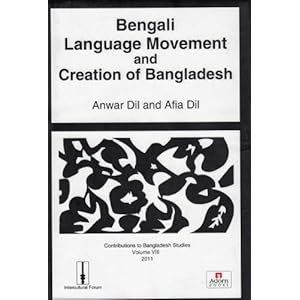
As Prof Mushtaq Khan put it, during our war 'everyone was killing everyone'. For an idea about the multi-directionality of the war and its killings see the Sarmila Bose lecture in London last year on Applying critical thinking on 1971. For more depth about our politics leading up to the war please read Afia and Anwar Dil's sober and exhaustive Bengali Language Movement  and the Creation of Bangladesh, which has recently been published in Bangladesh, ten years on.

This Punjabi-Bengali couple of anthropologists
write from two generations of experience,
so the people of Bangladesh, Pakistan and India
might understand
Bothering to know

There is normally a strong social whip out for those questioning the evidence base for the trials, the wild charges, the master narrative of the 1971 war, and of course the political motivations of the trials.  Between self-censorship, state-censorship and imprisonment we have a broadly epistemicidal regime that is also vulnerable. By epistemicidal I mean destructive of ways of knowing, and by vulnerable I mean that it is crumbling slowly. Starting from the top, the English speaking press were never going to kick up a fuss as they hate Jamat so much it blinds them, and pays them. Mir Quasem Ali of Jamat's Diganta Media group was locked up a long time ago. Newish conservative blogs like Alalodulal are silent. The Guardians Of The Liberation Narrative even had an early Al-Jazeera piece removed by intimidating their Dhaka correspondent.  I guess many of the others are so deep in developmentia that this doesn't even seem to be worth the effort. Why rock the boat if you've got family and life to lead?

Alternate accounts of the politics to Bangladesh are occluded or traitorised through the very mature anti-Bangladesh jibe. Its not just in cyber macho space though, but at the heart of the academy and in polite society. Last year, a history professor in Jahangirnagar University narrowly kept his job after Awami League students and staff went ape at his inclusion of books of Sarmila Bose and Syed Sajjad Hussain on a student reading list.  I know people sitting in pretty gilded cages scared to be seen reading the Bose book, so I guess something destabilising is getting in there at least.

There is another dimension to 1971 knowing that is new, and harder for the secular guardians to dismiss because of its white privilege and cultural capital. David Bergman's Bangladesh War Crimes blog is really hotting up and provides the only public transcription of the proceedings. His positionality is part of the appeal, having been involved in the 1995 War Crimes File documentary that blew a lot of wind into the sails of the Nirmul Committee by video editing a lot of their content and screening it in front of a UK audience unable to contest it.  Since the kidnapping of Shukron Bali he has really gone for it, as far as interviewing his poor deserted wife.

Bir Bangali 
Hiding behind a lady's sari
While Dhaka burns
Nobody shall learn.

30.3.12

Yasmin Saikia's work on oral histories of 1971 times

Prof Yasmin Saikia hails from Assam and is chair of Peace Studies at the University of Arizona USA. I found her to have a strong grip on the possibilities of sense-making and justice-making that we might achieve around the events of 1971. Naration and recruitment of intepretations and reconstructions of these events continue to lobotomise our polity.  A video from her recent talk to Brick Lane Circle will be posted up soon. Congratulations to the group for making the space to hear about these matters, beyond the poisoned, shrill and hopeless treatment meted out by the Liberation Industry.


She's interviewed hundreds of people, victims and participants and was quite disturbed at what is going on in the name of national justice-making. That she studied at undergraduate and masters level in Alighar Muslim University adds a greater expectation of her epistemystique, to which she delivers in sack loads.

Exploring ideas of insaniyyat (humanity), huquq al insan (rights of humankind), tauba (forgiveness) and restorative justice from the South Asian Islamic universe adds depth and spirit to any analysis of the wrongs wrought on the people, by Pakistanis, Bangladeshis and Indians at the time. She mused on the concept of neighbours and strangers in Quran, and how these transform under nationalism. She sees 1971 as an ongoing narrative and quite rightly resists the national narratives around it. 

The state of publicly countenances debate on the crown jewels of 1971 is abysmal. On the Internet check Genocide Bangadesh, ICSF and Mukto Mona. In real(er) life check out the Ghatak Nirmul Commission, the Sector Commanders Associations and the Awami League in general. It is disgraceful epistemicidal projection that must be superseded, but will be difficult to.

A few years ago Shah Abdul Hannan, a prominent Islamic social figure in Bangladesh was subject to tremendous abuse from the Liberation Industry for talking publicly about 1971 as a civil war.  there is a not of ignorance manufactured by people  who believe themselves to be acting pro-Liberation. Prof Mushtaq Khan says there are elements of civil, liberation and independence in the war as a device to build a future narrative that integrates the three running already. 

Saikia penetrates a few dimensions deeper into the lived experience:

  1. A Civil War of East versus West Pakistan
  2. A, International War of India vs Pakistan
  3. An Ethnic War Bengali vs Bihari, and
  4. A Gender War Man against Woman
I have her 2011 book on 1971 on order and recommend her work generally, she's already established, so this cannot be accused of being an attention seeking ploy by angry Liberation Industrialists. Now that our collective stupidity and cruelty is on national display through the International War Crimes Tribunals, people at home, diaspora and abroad might be interested in understanding things with some humanity.

This is one of the few means.

Here's a video of one of her talks on remembering to be human.


If you want to get to the meat, a 2004 paper can be found on line: 'Beyond the Archives of Silence: Narratives of Silence of the 1971 Liberation War in Bangladesh.'  I challenge you to read it and not choke and be moved.http://fugstar.blogspot.co.uk/2012/02/new-word-epistemystique.html#!/2012/02/new-word-epistemystique.html

18.1.12

Hearsay and whosay

One of the criticisms of Sarmila Bose's intellectual mooning at the Awami death script of 1971 was that she relegated the accounts of the less educated witnesses and raised the accounts of the pakistani military, and that this was an unjust thing to do.

I think this is educated people hiding behind uneducated people, using their uneducation as a device to enrol your sympathy and cover their bare behinds.

Its a hallmark of developmentia.

One of the things that powerful and criminal have in their favour is that their centrality grants an authoratative view, which they can misuse, and claim on a hard-to-assail privileged view.

In the war crimes court transcrpts im detecting a similar occurence, educated people have been busy coaching and fabricated witnesses out of vulnerable population.These witnesses have been shown for what they have are by the defence.

It makes you wonder how the bargain was struck between the core and the periphery of the League through local MPs. This makes you wonder whther the deal can be unstruck too.

So truthers need to know, who was present in heavy decision  and death making scenarios over those 9 months and what was said by whom. This is why the Pakistani military is important  and problematic.

Accounts of events mean less if the participant wasnt there. ...of course none of this matters if you base your closed systems view on peripheral experiences, hearsay, delusions and badly imputed facts.

The backers of the bangladesh was trial have Nuremburg on their minds.  This is why the 3 million figure was important, because it was of the same order as the Holocaust and gets you to the same spaces and discursive tool book. In these Nuremberg Trials, i am told, 'hearsay' was elevated to ridiulous levels.

Officialising the Nirmul committee then?


4.1.12

The War Crimes Filing Cabinet

As the Bangladesh War Crimes Trial is unfolding several new understandings are being made.
Recently, Holiday published news of how several of the witnesses to date have criminality and beholdenness to government clouding their testimony. The same publication also features a discussion of the history|futurity of the issue, how in the Awami script you must be a freedom fighter for all time and it doesn't matter what you are now, and how in the BNP script its the present and the future that matters.

But how are these scripts and documents created, and what is their role on (un)consciousness raising, (non)fact distilling and (in)justice making?

I live in London but think of desh a lot. It is incredible how political lies have become the basis of the state and I'm fortunate enough for my employment, status and safety not to be threatened by refusing to see truth in the emotional game being played right now.

In the UK, the trial of some of those accused of the racist murder of Stephen Lawrence has reached a result. A lot of hard work went into this and one important provocative document was the BBC1 documentary The boys who killed Stephen Lawrence. Some reviews called it tenacious but futile, the police didnt like it of course.  But its impact on the ecology of justice might be something worth pondering.

Documentaries on the nonwest made for the viewing of white structures of power have an uncomfortabley heavy weight in Bangladesh. In relation to the war crimes trials, Channel 4's 1995 The War Crimes File, from Twenty twenty Television is crucial to view.

It is easy to string together and then believe a visually compelling that you do not have the resources or inclination to contest. The time to pool our resources and inclinations is now.

And we are in luck because  the prison has escape encoded in its very bars.

 This documentary is important to appreciate, deconstruct and reconstruct. It is additionally fascinating given its cast, director ( David Bergman, New Age hack, War Crimes Trials reporter and son -in-law of ex Foreign Minister Kamal Hossain (i think)), and cheerleaders (Gita Saghal, Shahriar Kabir et al) . More generally The War Crimes File can be seen as part of a genre of film making that we should supersede with polyphonic approaches and multiple axes of critical reflection.

As our understanding of what really happened in 1971 deepens and truthens these archives and the (non)sense in them are crying out for greater scrutiny.  As a non supporter-follower of this trial, I see that eye witnesses are proving to be the hearsay of the politically leaned upon, criminals, party workers and freedom fighter benefit chancers. What of the cast?


14.12.11

The Awami League of Ignocratic Fairy Tailoring strikes again

Two bits of very terrible news today. The first from Bangladesh as Awami Leage lecturers at Jahingirnagar University instigate a witch hunt on a history professor for including critical tracts by Sarmila Bose and Syed Sajjad Husain on the Bangladesh war. Apparently its anti-liberation and worth whipping up student frenzy and authority over. This is reminiscent of the treatment meted out to all who question the Logic of Liberation: that the Awami League, the Mukti Bahini and the Indian Army came down the chimney 40 years ago to fill our stockings with Liberation.

Awami fascism is at a peak these days as Bangladesh = 40 approaches, as opposition leaders are on trial for war crimes. There is interesting coverage of the trial proceedings over here , the witnesses for the prosecution arent very good it appears and the defence counsel himself is being harrassed and undermined by the government.

Squint and find silver linings.

One positive of having a trial is that its forcing the accused to counter the allegations against them, amplified and disseminated over the past 20 years. Their defence is unlikely to be given a fair hearing as the decisions have already been made and the vests involved are very interesting. 'Socially' its good because the population at large has been kept in the dark about important aspects of the Bangladesh War, now its harder for the media and government to drown out every single word they say.

That said, I am not naive about the truth emerging anytime soon.

This Kangaroo Court operates in a society where rage, envy and hurt have been channelled all wrong, into injustice making. Where human rights only apply whilst the awami league is in opposition, to the tune of aid money and towards secular liberal types of people. The NGOs, donors and parties have bought off the collective mind and for scholars its simply easier to reproduce the fairy tales of liberation that please the parties.

This is a protection of intellect, dignity and possible even life issue. Three central, essential objectives of the Sharia.

Prof Mushtaq Khan, of SOAS has been saying for a while that neither of the three narratives : Liberation, Independance and Succession are sufficient and that they dont work for us, so we must make a new one.

4.6.11

Why numbers killed in 1971 War and 1974 Famine of Bangladesh really matter

In recent account-makings of killings in Bangladesh during the 1971 war, one of the rhetorics we use is 'numbers dont matter', one person is too many. While this is true, and killing one person is like killing all of humanity, I must beware of the blindness this calculated flattening creates.

If the Bangladesh war killed fewer people than the Bangladesh famine of 1974 then that is a great matter for the people to ponder.