Showing posts with label war crimes trial. Show all posts

4.9.16

Mir Quasem Ali's execution and the tale of two Bangladeshs

Liberating Nadiya 
I was watching the Chronicles of Nadiya recently and thinking about representations of Bangladesh in the international media, what they are, who they work for and what is actually real about them.

Reading about Bangladesh in most places you might think that the government there was a strong partner in The War on Terror, developing its people and that the only injustice was coming from the direction of deranged Muslims. Give or take a bit of white right left liberal frosting. That's the fiction that the Foreign Minister of the Occupied Turtle Island John Kerry dwelt in on his recent visit to the country. Its the fiction that people like Tahmima Anam write about and that Jeremy Corbynjaan says he reads, Lord guide him.

Begum Nadiya is real, talented, lovely, being commodified, and growing in agency and brilliance. Britain needs a good Muslim story to offset the awful ones and its mutating Islamophobia and she's generating feelings, even tears, of love among many. The Chronicles are well-shot two-parter that in my mind valourises the creative genius of our mothers and aunts and takes us on a trip from the mystical-material shini of the gonj, with kissing otters to the urban dystopias of culinarily challenged elite NGO workers and the North-South University ghetto.

I am all for integration. Therefore I wonder what meal I would cook up for the country's political prisoners in Kashempur and Dhaka Central Jail's, and their families, not to mention those of the assassinated, massacred and disappeared? After all, we usually recognise the vertical and the horizontal when we cook and eat, as well as when we see.

Who are you calling a one party state?
Over the past few months many have been enthusiastic to call Turkey a one party state. More recently we have observed Uzbekistan's Islam Karimov, who presided over the 2005 Andijan Massacre, transition towards a state of divine accountability. Karimov was a strong partner in the war on terror, and backed by The War on Terriors all the way, ex-British diplomat Craig Murray has a blog pretty much dedicated to this in all its colonial detail.

Well, desh actually IS a one party state, in which the state gets away with murders most foul, and the stench trail reaches well into these (English) shores: int development, culture and the political establishment . Every year, the British government puts a quarter of a billion into the hands of the country's NGOs. The niece of the Prime Minister is a sitting Labour Party MP.

In 2014, the ruling Awami League ran the fakest general election in the country's history, possibly giving the British Labour party purge a run for its money in the ridiculousness department. It was so fake that they had to ask their coalition ally, The Jatiya Party to form a pretend opposition whilst they blocked political gatherings by their political opponents by blockading their homes with trucks filled with sand [watch here].  This is a regime that massacres people,  most heart-breakingly during the Dhaka Massacre, which claimed the lives of countless unarmed sit-in protesters as they slept and prayed in the early hours of 6th May 2013 [archive here]. This is a regime which has introduced new legislation to enforce a self-serving and rather lobotomising perspective on history as national liberation delivery.

The Judicial Murder of Mir Quasem Ali
This is a regime that just a few hours ago judicially murdered the media pioneer and philanthropist Mir Quasem Ali, in a blood sacrifice to their Islamophobic [Article] political idol of Bengali Nationalism. His son, Arman or Mir Ahmad Bin Quasem, who was also one of his father's defence barristers, was illegally detained by state agencies on August 9 , nobody knows where they've put him and they are denying holding him [HRW Report].  It is a new level of cruelty that he will (probably) not be able to lead his fathers funeral prayer. Altogether, a sorrowful and terrifying time for the family, who have been on the receiving end of state persecution since the tribunals were established in 2010.

We believe that the ongoing impacts of our deeds continue to benefit us in the after life. Shaheed Mir Quasem Ali was an institution builder in health, media and banking and I'm beginning to learn about how generous in spirit and material he was. In so many ways he embodied the brighter practical side of the country's Political Islam tradition and so my guess is that he is deed rich.

I will write about the case specifics in more depth at a later time,  but two points before dropping some resources at your feet. First off, the tribunal that convicted Mir Quasem is a kangaroo court concerned with killing opposition politicians, manipulating the public and the judiciary, consolidating power and extending hegemony over history, bodies and resources. Secondly,  I'm still not sure how to make truths, restorative justice and reconciliation out of the Bangladesh War, but Yasmin Saikia has got an idea [Video]. The family campaign website is here. David Bergman's hole-prone archive of the tribunals is here. The Tribunal's 2014 judgement in here and the 2012 Skype Scandal is here.

Responses
The early responses from Bangladeshis are mixed, as one would expect. I suspect a lot of people are sick to death with them. The prayerfully sympathetic are asking the Almighty to accept Mir Quasem as a martyr, because he was killed in the path of truth and social service. People on Twitter are expressing solidarity on #WeAreMirQuasemAli and are smaller group is reproducing hatred against him with stale Shahbag-era quotes. My guess is that we will learn a lot more about his work and legacy with time.

Meanwhile the local, tightly monitored media compete with each other for horror honours, putting a new gloss on the term Sustainable Lievelihood Framework. Diaspora Awami League institutions are even more surreal, with ATN Bangla UK broadcasting a pro-government report with hindi melodrama music. Small groups of ultra nationalist hangsters celebrate their Independence and Liberation from Pakistan. With no sense of irony.


1.8.15

Salahudin Quader Chowdhury: No Executable Code is Associated with This Line

Earlier this week prominent Bangladeshi opposition politician Salahuddin Quader Chowdhury lost his appeal at the Bangladesh Supreme Court against the death penalty for convictions by the country's International Crimes Tribunals ( ICT). He has been in government detention since 2011, and the international press has detailed the torture he experienced at the hands and instruments of the British trained Rapid Action Battalion.

Hailing from a political family based in the port city of Chittagong, known as Islamabad in Mughal times, Chowdhury has served as an MP on 7 separate occasions and was a close adviser to the former BNP Prime Minister Khaleda Zia during her last stint in office. He was in his early twenties during the 1971 war year and according to his witnesses who made it through the tribunal's clumsy rigging, had been in West Pakistan for the duration of the period of the crimes for which he was convicted. The problem is that the Tribunal and the Supreme Court, with their characteristically warped view of the world, has refused to acknowledge his absence from the scene, as corroborated by many of his peers.

Given the maddening BS that we have been expected to swallow regarding people in 1971, BS thats resulted in the judicial murders of Abdul Quader Mollah and Muhammad Kamarazzaman, I think its high time to review the horror stories woven around Salahuddin Quader Choudhury in 1971 and unearth greater truths buried in the rubble of the Bangladesh Motanarrative.

A Roundly Criticised Show Trial

For years before the current Awami League regime came into power on the back of a diplomatic coup, I never thought that fair investigations, trials and resolutions would be possible. I felt that it was just an game of political emotional blackmail on account of the national liberation mythology.  It is a real pity that such a lot of lives, reputations and human horsepower have been dissipated to produce such injustice, but it goes with the territory and didn't have to be inevitable, we(pl) made it this way.

Criticisms of the conduct and integrity of the tribunals have been made by many of humble and of privileged backgrounds. For example there is the independent review by Geoffrey Robertson QC , the Economist of London's coverage of the chairing judge's collusion with a partisan activist and Bangladesh's favourite son-in-law David Bergman long archive of the tribunal's proceedings. Just a fortnight after he was given his original death penalty, an Early Day Motion was tabled in the UK Parliament highlighting the lack of due process in his trial and that of the late Abdul Quader Mollah, who was executed a few months later. It was signed by 32 MPs including people like Jeremy Corybn, Peter Bottomley, Diane Abbot and Michael Meacher.

A distinct political lineage to Year Zero 71sterism

SQC, or SaKa as he is alternatively known, is one of Bangladeshi society's intriguing characters. He represents a genealogy of politics that predates the rise of the Awami League and has never really been scared to give them the finger. His symbolic capital and privilege are independent of Liberation 1971 events and the rise of Bengali Nationalism. That is not to say he is an angelic figure, he still commands immense power over his political enemies from behind a cell.

As a London resident with a Bangladesh facing eye or two, I remember his amazing political insults and his unsuccesful bid during the BNP-JI regime for Secretary General of the OIC, which was viscerally resisted by the Awami League, and deludedly promoted by the BNP at the time. In retrospect it is good that Prof Ehsanoglu won that election, as the pro Islam and pro Muslim Ummah social and intellectual currents in Turkey were and still are in a better place than in Bangladesh.

What I am becoming more interested in is the condemned man's father, Fazlul Quader Chowdhury. The political orphans of Bangladesh, need to take as many of these political bypass figures closer to our hearts for the sake of past mistakes and wider possibilities of the future

He was a political stalwart for 3 decades through more interesting times, who didn't switch allegiance to the Bangladesh cause and died in prison in 1973 under dubious circumstances. There is a slightly hagiographic website about him here.

He was elected General Secretary of the All-India Muslim Students Federation in 1939, and was with Netaji Subhas Chandra Bose, just before he left for that important mission to rid India of it's colonial yolk during (Colonial) World War 2. Netaji was to offer to relieve the Bengal Famine with food aid from Myanmar, an offer which was refused by the British colonial authority, who censored it. A war crime by any standards.

Interestingly, in 1942 when Fazlul Quader was arrested, one Mujibur Rahman, a rising Bengal Muslim Student League leader, organised a student strike in solidarity with him. Decades later it is said that Fazlul Quader, by then an established trade union and political leader, was to reject Mujibur Rahman's offer of his daughter Hasina's hand in marriage to his son Salahuddin.

I would like to invite people to flesh out this proposal story, because it lends extra humour to some of Salahudin's comments over the years, helps us to understand Hasina's insecurity and more importantly, reminds us that the political elite and cosmology that Bengali Nationalism and its kitsch culture machine has inflicted on us is not the End of History.

There were and there are much more expansive and nobler horizons.

What is to be done?

We do not know how this is going to pan out, but we should speak out against the injustice being dealt to SQC on a matter of principle, not to mention support the family and other people in such predicaments.  We know how institutions in desh act with impunity and seek to destroy any who challenge their control and controllers. We also know how their family, NGO business and ideological networks assist them to tell the stories they want people to know about Bangladesh, and to be heard.

In this light, simply pointing out more accurate and reliable histories and principles of justice is where we should start.

24.2.15

Judicial Murder of Kamaruzzaman on the cards again and the Robertson Report

It is with great sorrow that I comment on the impending execution judicial murder of Jamaat e Islami leader Muhammad Kamaruzzaman, by the Bangladesh state for war crimes alleged to have taken place in 1971 when he was 18-19 years old. It is very hard for an Islamist to get justice from any court in the world at this moment, least of all from a tribunal whose rigging has been internationally recognised.

It is an unfortunate feature of Bangladeshi historiography that bullshit is easily rendered into fact, and that events like the hideous Sohagpur massacre have been retrospectively pinned onto Kamaruzzaman.  As well as objecting to unfairness of trial and false historical evidence making, we need to ask ourselves how this has been possible. Many people, Bangladeshi and non-Bangladeshi have been instrumental in creating the myths that mislead us on Bangladesh. It can be observed that their sons and daughters still dominate the English medium nonsense-making engine that represents Bangladesh in the international media. Thankfully, more and more are seeing through the facade.

Before this tribunal, Kamaruzzaman was not implicated war crimes, he wasn't event a primary or secondary object of hatred to campaigners on the issue. In the image below we see a younger Kamaruzzaman speaking on a panel about Rethinking Confrontational Politics with some prominent members of Bangladesh's 'vibrant' civil society in 2000. From left to right we have Kamaruzzaman the Younger, NGO-lady Khushi Kabir (whose husband tried to run a local Amnesty franchise but was allegedly too corrupt), the Daily Star editor Mahfuz Anam (whose daughter Tahmima Anam represents Bangladesh in the New York Times and Guardian) and economist Rahman Sobhan (whose son Zafar edits the Dhaka Tribune).  I would love to have a read of the proceedings if they were recorded.
'
Amateur caste system aside, Bangladesh's quite donor-dependent civil society has little connection to the country's grass roots and is blind to its own prejudices, which includes Islamophobia, a rarely explored prejudice in predominantly Muslim societies. This makes killing Kamaruzzaman and Hating Jamaat e Islami Bangladesh, linked objectives for them and those who (think) they represent.

We can expect further repression of Kamrazzaman's lawyers, family and well wishers, from the government and establishment media machine in the coming days.  Twitter tells me that there has been a joint forces raid on his home in Mirpur, Dhaka and two family members arrested.

Last November I wrote about Kamaruzzaman's unjust predicament, and the year before about his Strategy for Change for his party. It is a party that requires much transformation, and he is a reformer struggling and leading people to realist some of those reforms. It is my speculation that he is targeted because it is people like him who represent a positive future of Jamaat, responsive to social justice needs, not mindless conservatism.

Through killing him the Awami League does two things, it satiates the primordial blood lusts that it has nurtured in its followers for decades, and enflames and destabilizes the progressive tendency in Jamaat, and tries to make beasts of its adherents.

Earlier this month an independent and constructive report detailing the systematic injustices of the current war crimes tribunal was published by Geoffrey Robertson QC . Its independence has been  questioned by David Bergman, who has made a whole career, family and legacy covering the issue, apparently using evidence extracted under torture.

Robertson's report sets a new reference point for the internationalisation of justice in the issue. Most interesting for me is the inclusion of an argument for the posthumous trial of  General Tikka Khan, author of Operation Searchlight, the brutal army crackdown which kicked of the Bangladesh War. For reference, after the war General Tikka Khan was awarded the Governership of Punjab by late Benazir Bhutto.

I think transformative justice is very important for ongoing dignity and for civilisation to flourish. Till today, both Pakistan (Model Town, Lahore June 2014)) and Bangladesh (Motijheel, Dhaka May 2013) are ruled by brutal establishments that massacre their own citizens to hold onto power.  Understanding how they operate, self legitimate and spawn themselves is in the public interest.


I have always thought that the Bangladesh war crimes trials were an unjust idea, because there is no shared appetite, or capacity, to know what really happened, just self-aggrandizing delusional, hurt histories muddled with ideological axes. To remedy this, I wholeheartedly support William Gomes'  letter to Imran Khan for Truth and Reconciliation between all of the societies involved in the Bangladesh War.

To close, Muhammad Kamaruzzaman deserves a fair retrial at the very least and the Robertson Report outlines how this may be achieved. Murdering him via the judiciary further weakens the governments grip on history. That our so-called civil society stands for such persecution questions their claims to morality and civility

4.12.14

Bergman, Contemptgate and into the categories of the Bangladesh war dead

Dhaka based British journalist David Bergman has been found 'guilty' of contempt by a Bangladeshi court for contesting the figure of three million dead during the 1971 Bangladesh war [JUDGEMENT TEXT]. The legal grounds are  Byzantine, I would argue that the 'lesson' he is being given is for humiliating Bangladesh's judiciary and its mindless reproduction of the Bengali National mythology.

The judges are unfit to have an elevated position over 160 million souls, and pretty much deserve a good ribbing after having played a vital role in blowing probably the only chance Bangladesh was going to get to investigate the war and hold people to account, with key figures still alive. If you think about it, the judges have handed the government's political nemesis, the Jamaat-e-Islami a long term moral victory with these kangaroo trials, which their bleadership are likely to piss away on something trivial, neoliberal or both.

The Awami League government is faltering in step these days, bitchin' about the random US diplomats meeting with their deposed opposition, and doing a damage limitation exercise after a cabinet member accidentally let out what he really thought about Bangladesh's Muslims and their economic 'usefulness'.  A few days back, establishment court photographer Shahidul Alam complained that some of his Drik gallery staff were beaten up by government party cadres, without irony.

White and capital powers are always looking for a more convincing looking set of clients. The sins of the Awami League are documented and will not be used against them, but to negotiate against the people's interest to extract greater rent

The government probably going to try and deport Bergman to ease their path to judicially murder another Islamist bogeyman, this time the progressive Kamarrazzaman, in time for Victory day (soon to be Vengeance Day). There is no such thing as press freedom in Bangladesh, unless you are serving the government's will, then you can press and oppress what you like.

This moment does prompt one to reflect however, on the unjust continuing detention of Mahmudur Rahman, and why the establishment in Bangladesh is so scared of talking about how many people lost their lives in and around the Bangladesh War.
   

Bergman speaking outside court in Dhaka this week. Beside him is is wife Sara Hossein,  
a high profile barrister and BLAST campaigner.  Because its very relevant to how things work, 
I must add that Bergman's father in law is Kamal Hossein, an eminent barrister and 
Bangladesh's first Foreign Minister and constitution writer.  

Arrest of Amar Desh editor/owner Mahmudur Rahman in April 2013.
This followed months of intimidation for publishing revelations of collusion at the Tribunals,
and standing up to the fascistic Shahbag movement. The final straw for the government was
 his publication's giving voice to huge public revulsion at reckless anti Islamic provocations.
My way of resisting this illegitimate, tyrannical and hopeless government is to deepen the critical numeracy for which Bergman is being persecuted, and discuss numbers and ecology of violence issues further and more deeply. I disagree with Bergman's politics,laugh at his admission of confessions extracted under torture in his 1994 Channel 4 film, and am disgusted at his denial that the 24 dead he saw after the Shapla Chottor Massacre on May 6th, constituted evidence that the government had committed a massacre. However seeing how Al Jazeera journalist Nicolas Haque's family was threatened by ultranationalist for covering the trials, there might well be subsurface reasons, not bastardesque ones for the later.


Friendly fire or collateral damage?
The court has apparently given Bergman the choice of a token fine, or an opportunity to gain source material in a Bangladeshi prison over a week. This episode is surreal because  Bergman's white privileged, but flawed efforts have done a lot to render the trials possible and palatable to the white liberal left, not to mention the neocons.

What nobody has been able to do however, is to arrange things so that we might truly know all perspectives and experiences of the war year, robustly. 'Civil society' has always been intolerant of other perspectives, and the trial has been incompetent, murderous, collusive and entrenching of this tyranny.  I was against trials in these current historiographical circumstances.

Bergman, who maintains the best English language archive on the proceedings, has responded to the verdict here and here, while English PEN have jumped to his defense quite eloquently.   The court had problems three of his posts.

  1. His 11 November 2011 blog where he visited the honourless terrain of the origins of the 3 million war dead. 
  2. His 26 January 2013 blog where he analysis the in absentia judgement on Abul Kalam Azad, a month or so after the revelations of the Skypegate collusion materials and shortly before the ultra nationalist Shahbag kicked off. 
  3. A second blog analysing the Azad judgement on 28th January 2013, where Bergman questions the wisdom of putting a lot of prejudicial and un(con)tested information into the introduction of the court judgement.
A few weeks ago, there was another nationalist bunfight following a young deshi Al Jazeera English reporter's reference to Bergman's ruminations on the numbers of war dead. Establishment voices used the opportunity to reassert themselves and push alternatives ideas, and voices beyond the pale of acceptability.

Although he is not the only one to contest the figures, white people listen to him, so as the logic goes, he matters. It hurts the Awami ego when its source of power, the Bangladesh foundational mythology, is interfered with. This hurt is amplified by the fact that the ruminator is white, accepted as such by the west, and has married into an elite local family not unfamiliar with Bangladeshi and International law.

Whose deaths matter?
 There has been a sad lack of analysis of the dynamics of war during this tribunal. Last month, during the bun fight, Bergman cracked open Categories of Death, which are quoted below

- there are civilians murdered by the Pakistani/collaborators 
- there are civilians who died in Bangladesh from war related diseases, hunger etc
- there are civilians who died in India in the camps
- there are those Pakistani solders and Mukti Bahini who died in the course of battle
- there are those Pakistani solders and Mukti Bahini who were were killed after being captured.
- there are Biharis who were killed by the Mukti Bahini

 I would add the following

-Biharis and Urdu speakers killed by Bengalis in the run up to the Pakistan Army crackdown
-Biharis and Urdu Speakers killed after the official end of the war
-Civilians and fighters killed by Indian armed forces.

Numbers, with dates, places and contexts tell us about the ecology, transfer and interactivity of violence. That is if we are interested in understanding ourselves.

It is a real pity, failure and indictment that the names and stories of death circumstances of everyone have not been collected. I have heard of one effort well underway doing so and wish that quiet man good luck. The urban middle classes flagellate themselves regularly over the deaths of urban middle class intellectuals, dedicating them a whole day, however the lives of sons and daughters of farmers are rarely accorded value.

An Elections Mubarak present from a well wisher. 

If late Pakistan is to be characterised by state crime, prejudice and economic deprivation, then we can see through the straight light from 25 March 1971 and 6 May 2013 that the conditions of Pakistan never ended. 

Bhashani was correct nothing structural has changed, if anything colonial continuities have grown more intimate.

And now that Bangladesh is established fact, not Biafran, and that Prime Minister Sheikh Hasina Wajed is General Yahya Khan, and that former UN Peacekeeper and  Dhaka Metropolitan Police Commissioner Benazir Ahmed is General Tikka Khan, maybe a few more might have an open ear to the cultural choreography and emotional blackmail surrounding the Bangladesh War - not to mention the underlying accumulation by dispossession. 


Why are numbers important?

What difference does a number make? is the line of argument used to persuade people away from asking too many questions, by people with a stake in continuing the ignoracracy. They are in their second generation.

These are the same people who insist that numbers do matter and that they are very low, if not zero for the Shapla Chottor massacre and related incidents last year. They demand that oppressed victims of crimes deliver the government that killed them lists of the dead immediately.

It matters because it gives us an idea of the lengths social formations will go to to achieve their goals and undermine those who challenge them, it also complicates the monoculturalised impacts of the singular Bangladesh narrative and trains us morally to even try and understand other people. Critically it matters because hegemonic power manipulates good people and kills with it. 

West Bengali political scientist Sarmila Bose walked through the heavily mined ground of Bangladesh war deaths a few years ago, with an empirically rooted study that examined a handful of incidents from different angles and closed of with a numerical analysis of estimates that caused some upset at the time. Her talk at the Brick Lane Circle was called How can we apply critical thinking to understand 1971? and viewable online here.

It is hard to know of her work's content in Bangladesh, where her book is perceived like a radioactive substance. One history professor was harrassed and nearly lost his job for including it on his student's reading list. however for all the narcassistic critiques on the pages of EPW, Bose does not provide us the most startling knowledge on the subject. 

These inconvenient reports emerge from Abdul Mu'min Chowdhury's bilingually sourced 1996 publication 'Behind the Myth of 3 Million', which can be read online . It seems studiously excluded from the Bangladesh canons of Bergman, Shahriar Kabir, David Lewis, Meghna Guhathakurta and Willem van Schendel, Gary Bass and Srinath Raghavan, though Sarmila Bose briefly picks up on it.

Chowdhury is not endeared to Mujib family's Bengali Nationalist project, most people with pro Islamic intellectual convictions see it as an essentially Islamophobic ideology.  Like Bose doesn't feel the need to massage egos and pride for repeat custom.  He has written at length on the long range histories, or Brahminism and Buddhism and their impacts on the Bengal Muslims. His focus on the Myth of 3 Million here may read to some as disparaging to those with genuine family suffering. However, when taken in the context of the human, economic , intellectual and civilisational costs of accepting such a big self regenerating and maddening lie that it critiques, the sharpness makes more sense.

The excerpts below shed light on Mujib's egotistical attitude to emerging quantitative evidence [p29-30], and through the words of a staunch pro Awami League writer and witness, the Provisional Government in Exile's responsibility for a great number of refugee deaths [p56-57] 


4.2. The Inquiry Committee Report:
The Inquiry Committee seemed to have also failed Mujib in giving him
the kind of truth he was after. The Government of Bangladesh never
said a word about officially receiving the report, which was, as per as
the original Gazette notification, due on or before 30 April 1972 or
what happened to the Inquiry Committee's work.

On 6 June 1972, William Drummond reported:
"Since the third week of March, when the Inspector General's
office in the Bangladesh Home Ministry began its field
investigations, there have been about 2,000 complaints from
citizens about deaths at the hands of the Pakistan Army have
been received."
[3]
Later, sources in Bangladesh reported that the draft report showed an
overall casualty figure of 56,743. When a copy of this draft report was
shown to the Prime Minister,
"he lost his temper and threw it on the floor, saying in angry voice
'I have declared three million dead, and your report could not come
up with three score thousand! What report you have prepared?
Keep your report to yourself. What I have said once, shall prevail."

[4]


7.2. The Categories of People ‘Killed’
...Irony is that they were made victims by
their fellow 'Bengalis'. Abdul Gaffar Choudhury, the columnist,
disdainfully wrote:
“Now we are saying three million Bengalis have been martyred.
Without even having a survey we are claiming that three million
Bengalis have died. But those of us who went to Mujibnagar
and took up administrative responsibilities were responsible for
the death of four hundred thousand children, one million women
and two hundred thousand old people, out of the ten million
Bengalis who took refuge in India. The records of their death
exist in the newspapers of Calcutta and in the refugee related
documents of the Government of West Bengal....A section of
our public representatives have taken away food from the mouth
of these women and children and have sold the goods that came
from foreign countries as aid to the refugees ....Millions and
millions taka's worth of foreign aid came and most of them
disappeared in the cavern of corruption.”
[3]
It was not Abdul Gaffar Choudhury alone, M.R. Akhtar Mukul, another
leading liberationist, has also provided us with a vivid eye witness
account of this heartless killing of hapless women and children at the
hands of the Awami League politicians. [4]


Newspaper representation from June. What on earth does Abdul Ghaffar Choudhury mean?


3.11.14

Muhammad Kamrazzaman's impossible situation and the problem of knowing what happened

The Government of Bangladesh has seized momentum from the recent death of Ghulam Azam to advance its War Crimes Trials Agenda on the remaining leaders of Jamaat-e-Islami Bangladesh. In recent days former Minister Matiur Rahman Nizami and media pioneer Mir Quasem Ali have been given death sentences. Perhaps most tragically, the reformist Muhammad Kamarazzaman's appeal was quashed and he looks likely to be executed soon, in time for the ruling party's National Independence Day celebration.

A Rare Reformer
I haven't met any of the Jamaat official leadership, but Kamarazzaman is one figure I would like to . Last year I wrote about his Strategy for Change, a lengthy document circulated among Jamaat's leadership, rejected, then leaked by supporters. Weirdly, its one of this 10 year old site's most read posts.

The Strategy recommends a number of measures to lift the party, rather its interpretation of the socio-political cause of Islam to a better situation. Written before the Arab Sting, it seems very inspired by Turkey's AKP experience, as Shah Abdul Halim narrates on a Muslim Brotherhood blog, It engages with party nepotism, clearing out 1971 era dinosaurs and social shrapnel, demands that the party cease manipulating its student wing and proposes organisational gender justice.  Personally, I'd like to know more about how a new party would implement and maintain the social justice focus his writes of and steer clear of narrowing shariah politics.

A short analysis of the charges and evidences brought against Kamarazzaman can be found on the Kaagoj blog collective, which is sympathetic to the politics of the accused. The BBC's Sabir Mustafa, (an ex Daily Star hack) is maintaining an editorial line in favour of the Government of Bangladesh as we saw throughout his cover up of the massacre of protesters in Dhaka last May. David Bergman, whose white privilege works differently, has organised court transcripts and his own analysis on his war crimes blog, and the original court judgement can be accessed here.

The Problem of Knowing
The conditions for knowing (reliably and exactly) what happened during the Bangladesh war year do not exist. This is no thanks to the gravity of the Bengali Nationalist motanarrative and the epistemic autism of its victims, but also the failure of Jamaat-e-Islami's misleadership to honour the public's right to know their detailed side to the story, and the stories of their own dead. The public sphere is closed to empathy for situational environment for 'loyalist' auxilliaries to the late East Pakistan.

It is really hard to know what really happened, even if you want to as the assemblage of institutions, informations, human's and knowledge supply chains perpetuates dubiosity. I'm not saying that everybody needs to eat themselves up over this, but some need to investigate thoroughly, against the grain.

The practice of fabricating and manipulating people prosecution witnesses during these tribunals has been established with the (apparent state) abduction, disposal and detention (in India) of prosecution witness Shokranjan Bali and new video evidence suggesting malpractice from Investigating Officer Abdur Razzaq Khan . The lack of integrity, judgement and competence of the judges involved, given their coaching by diehard ideologues and manipulation by the state has been evidenced by leaked or hacked skype conversations and emails.

On the other hand,  crimes are committed, selectively remembered, represented and mobilised with deadly and debilitating political effects, like we saw on 28th February and 5-6th May 2013.

Advocates of the 'these trials are fine, messy, but fine, line of thinking' which dominates the small and inbred elite establishment voice in Bangladesh commonly argue that there needs to be justice for the victims as well as the alleged perpetrators. This may be a rhetorical tool, but there are many who are sincere who hold this line and the legalistic and lobbying defence doesn't touch the core of the matter, which is ' If you didn't kill X , then who did? what was your role?'


Shohagpur
One of the terrible events Kamrazzaman stands accused and condemned for is the case of the Shohagpur massacre. We might connect the event with the war machine operating in the area and time, comprising the Lt Col Sultan Ahmad's Army garrison at Jamalpur,  the army riverbank killings at Shashan Ghat on 21 June, and the Mukti Bahini attack on Capt Ahsan Malik's Kamalpur border outpost on 31st July.

This is not Dhaka, or the beginning and end of the Dhaka-centric experience of the war, it is north Bangladesh, and the middle of the monsoon near the borderlands. Its not the suffering of the globalised urban elite, it is the forgotten rural poor.

Born on 4th July 1952, the condemned is just a few months older than Pakistani cricketer-turned politician Imran Khan. He would have just turned 19 at the time of the 25th July/10th Srabon Shohagpur Massacre. He wasn't to finish his A-level equivalents until 1972, before graduating in 1974 and completing a masters in Journalism at Dhaka University in 1976.

Years ago, establishment columnist and 1971 film maker Afsan Choudhury wrote a piece on Shohabag, which he first visited in 2000 after UBINIG's Farida Akhter's efforts to highlight the truly awful and continuing plight of the village of widows whose 120 menfolk were massacred at dawn, and who suffered all sorts of deprivation.

Kamarazzaman is absent from the scene recreated by the journalist who focuses instead on a local quack Kader Daktar, who, enraged at miscreants raiding his storehouse full of ill-gotten items, took out his vengeance on the villagers by playing the War on Terror card of those times, reporting them to the local Pakistani garrison ( presumably connected with Jamalpur headed by Baloch 31 Regiment's CO Lt Col Sultan Ahmad )

Absence in previous accounts is a recurring theme in this tribunal, but one which is summarily dismissed by the jurisprudence upon which it runs. Hasan Iqbal, the son of the condemned made the point today, that no book on the subject before 2011 includes the name of Kamarazzaman in connection to this shaytanic event. Indeed, this absence can be noted when googleing around the usual areas of knowledge production, of mukto mona and uttor shuri. Given this, the vulnerability of witnesses to prosecution inducement suggestion and manipulation, and the degree of influence that a 19 year old could have on such a situation even if they were in the fray, and it requires a leap of faith or calousness to assign Kamrazzaman command responsibility and guilt for genocide.

Because the tribunals are so singularly about destroying the current leadership of Jamaat, they do not connect with the ebb and flow of the war and the two (main) military establishments experiences of the place. Unless these knowledges are interacted, reconciliation and understanding will be incomplete. Without accounts from the JI accused's experience, how might their presumed guilt be unproven to the court of kangaroos?

Don't talk to me about heroes
At the time of the massacre, there was Mukti Bahin and Pakistani auxiliary activity in the area, but the Indian account, so far that I can tell, doesn't really attribute much effectiveness to Mukti operations at this time (July). Much later however, banter between Indian and Pakistani commanding officers at the siege of Jamalpur garrison in December, reproduced here, is relevant. MachoPaks extoll Sultan Ahmad as an 'unsung hero' for 'fighting talk', despite his post cowardly escape 'gallantry award'. I think it points out a key lead and potential villain.

Just like in Sarmila Bose's multiple angle account of a handful of war situations, the precision, arrogance and helicopter bragishness of military accounts, stands in sharp contrast with the narrative of human sorrow of the survivors. It is really unfair, but legal epistemologies (sorry) privilege the most established and familiar forms of knowing, mitigating the weird, the alarming and strengthening the powerful.

So my questions for now are.
  • What kind of investigation is possible in Shohagpur?
  • Who will invest resources there?
  • What does restorative justice look like?
  • Will Imran Khan's PTI agree with proposals for truth and reconciliation with the truths?
  • What to Farida Akhtar and Afshan Choudhury have to say?
  • When will Bengali Nationalists officially be able to bear razakar historiographies?


Fratricide + Politicide = 0?
Most people will not have heard of Kamarazzaman before these tribunals started because he was never picked out as a specific figure of hatred. This is because of the underlying intention of the tribunal,revealed by its rough sampling strategy of pin the crime on the Jamaati. However, there is something more holistic going on if we consider the capabilities, psychic impact and public perception of each individual. Given supportive public pronouncements and actions from the Awami League government and its supporters, the term politicide is very appropriate.

Late Ghulam Azam was singled out by the Shahriar Kabir and the  Nirmul Committee in 1992 as he and his party decided that his leadership would be a good idea given his seniority during the Bangladesh war. Delwar Hussain Sayeedi, who it transpired wasn't even in the Jamaat party during the war, was targeted by BRAC's Asif Saleh and his now defunct Drishtipat "Human Rights" organisation, to align the Islamophobic UK press with the Awami League's political imperative to disarm Jamaat's most charismatic connector and mover of the masses.

Nizami and Mujahid's inclusion in Khaleda Zia's cabinet and reportedly good individual performances as ministers for Agriculture, Industry and Social Welfare must have provided strong motivation amongst the disgruntled urban elite. In the case of Mir Quasem Ali, his innovative Diganta media outfit challenged the idea that Islamists were destined to remain poorly presented and inarticulate in this media driven age. That was until the TV station was shut down on the morning of the May 6th Massacre.

It seems to me that it is Kamarazzaman's reformative approach to political practice, frustrated by internal opposition that completes the sense of politicide of Jamaat. Contrary to some opinion, the personality-cult politics of Bangladesh does operate in its biggest Islamist party and it is unfortunate for him, his family, party and the general society that it is doing him wrong. He presented a transformational option with Strategy for Change a continuing good deed proportional its eventual unfolding, inshAllah.


3.1.14

Tahmima Anam, The New York Times and the Bangladesh Motanarrative

 Narratives that make your head bleed

Last week, the ultranationalist bloc in Bangladesh, The Shahbag, was burning effigies of Imran Khan. He had dared to comment on that crown jewel of Bangladesh's 'internal affairs', the dubious trials of those accused of crimes during the 1971 Bangladesh War.  Please note that I have been against these trials since before they existed, as they are based on a false history and a narrative which makes the head go fat (mota), and unable to handle other truths.  

It is what I call a motanarrative, a story that possesses you so much it gives you brain damage.

Imran Khan's speech in his parliament was rare (video), and took place in the context of the aftermath of the judicial murder of Abdul Quader Mollah in Dhaka on 12th December by a judicial system whose credibility is at an extreme low point.

It may be a little late in the day for it, but a growing body of commentators are coming to the consensus that the term fascism can be justly applied to the running situation in Bangladesh.


A letter to America?

Tahmima Anam's New York Times article was not the best intervention from a Bangladeshi on the subject of Bangladesh-Pakistan relations on 1971. That prize goes to this letter to Imran Khan, as well as people of balanced mind and silenced tongue, which addresses issues of Truth and Reconciliation. However it was a powerful contribution, from an author with a right to audience granted primarily by her inherited symbolic capital, and western academic credentials.

For those who do not know and who should, Tahmima Anam is the daughter of Mahfuz Anam, editor of the Dhaka based and Transcom associated Daily Star. She has a masters in Creative Writing and wrote an anthropology PhD at Harvard University on the intriguingly titles Fixing the Past: War, Violence, and Habitations of Memory in Post-Independence Bangladesh. She is also responsible for the Hay Festival Dhaka, critiqued this year as the end of the line eyewash for an elite covering up a massacre.


My comments on the piece are in [square brackets], although the title sounds agreeable, I have several problems with it.

As I would expect, it misreads Anthony Masceranas, the Christian Pakistani journalist who blew a whistle on the deeds of the Pakistan Army; and Hamoodur Rahman, the Bengali-Pakistani judge whose commission report on the matter was only declassified nearly 30 years after the War.


CONTRIBUTING OP-ED WRITER

Pakistan's State of Denial

  • FACEBOOK
  • TWITTER
  • GOOGLE+
  • SAVE
  • EMAIL
  • SHARE
  • PRINT
  • REPRINTS

DHAKA, Bangladesh — It was a Paksistani [sp] journalist, Anthony Mascarenhas, who gave the world the first detailed account of Bangladesh’s war of independence. In April 1971, soon after the army of Pakistan started suppressing the secessionist movement in what was then still the eastern part of the country, it invited Mr. Mascarenhas to report on the conflict, believing he would buttress the false propaganda of a just war. Mr. Mascarenhas promptly moved his family, and then himself, to Britain knowing that soon he would no longer be able to live in Pakistan.
Zahedul I Khan
Tahmima Anam
Opinion Twitter Logo.

Connect With Us on Twitter

For Op-Ed, follow@nytopinion and to hear from the editorial page editor, Andrew Rosenthal, follow@andyrNYT.
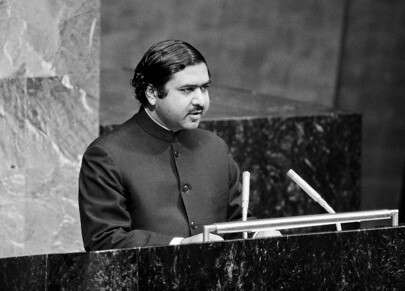
“For six days as I traveled with the officers of the 9th Division headquarters at Comilla I witnessed at close quarters the extent of the killing,” Mr. Mascarenhas wrote in a lengthy, damning report published under the headline “Genocide” in the June 13, 1971, edition of The Sunday Times.
“I saw Hindus, hunted from village to village and door to door, shot off-hand after a cursory ‘short-arm inspection’ showed they were uncircumcised. I have heard the screams of men bludgeoned to death in the compound of the Circuit House (civil administrative headquarters) in Comilla. I have seen truckloads of other human targets and those who had the humanity to try to help them hauled off ‘for disposal’ under the cover of darkness and curfew.” [Note how Anam has been silent about the truck loads of human bodies removed from the scene of the Motijheel Massacre on 6th May 2013, attacked in the dead of night by cover of darkness Ref: Audio eyewitness Account, Hospitalised victim account 1, Hospitalised victim account 2, Hospitalised victim account 3, Hospitalised victim account 4 , secretly filmed policeman in a taxi stating 400 were killed]
Four decades later, Mr. Mascarenhas’s government still insists on denying the past: the mass killing of civilians (perhaps as many as three million [Anam knows this is patently untrue yet repeats this figure for emotional effect. Ref: The journalist who was present when the 3 million death toll was first stated by a fresh out of jail Mujib]), the targeting of Hindus, the systematic rape of thousands [Recent, detailed research by Sarmila Bose appreciates much of the Brave Masceranas account, but also finds limitations to his informant network] . On Dec. 16, Pakistan’s National Assembly adopted a resolution expressing concern over the recent execution of Abdul Quader Mollah, a leader of Jamaat-e-Islami, Bangladesh’s leading Islamic party, who was convicted by a Bangladeshi court [a highly problematic trial] of committing murder and rape while collaborating with the Pakistani Army during the 1971 war. Calling Mr. Mollah a Pakistani sympathizer — and the independence of Bangladesh “the fall of Dhaka” — a multiparty majority of the assembly complained that Mr. Mollah was sentenced because of his “loyalty to Pakistan” [This was quite dumb on the part of the Pakistanis, and suggests a lack of homework]  and asked the Bangladeshi government to drop all other cases against the Jamaat leadership.
There is no doubt the Pakistani Army committed war crimes in 1971. Yet in history books and schoolrooms throughout Pakistan, the army’s atrocities are glossed over. [Just like we gloss over how Bengali Nationalists committed atrocities on their adversaries before during and after the war]
This denial prevails despite an official study by the Pakistani Army. Just after the war, Prime Minister Zulfikar Ali Bhutto set up an independent judicial commission to investigate atrocities committed in East Pakistan in order to understand why the army had failed there. When the Hamoodur Rahman [interesting fact, Hamoodur Rahman was Bengali] Commission report was published in 1974, it documented how, under the pretense of quashing a rebellion, the Pakistani Army had planned and carried out the execution of intellectuals, soldiers, officials, businessmen and industrialists, and had buried them in mass graves. [ I don't think Anam has read the report properly, which does include crimes of Pak army, but is heavily geared towards military failure analysis and documenting crimes of Mukti Bahini before and during the war. You can read it HERE]
The commission recommended that the Pakistani government set up a special court to further investigate misconduct by the army. This never happened, and the report remained classified for nearly three decades. Five Pakistani heads of state have visited Bangladesh since 1971 without extending a formal apology. The closest any of them came to recognizing Pakistan’s wrongs was Pervez Musharraf, who wrote in 2002 in a visitors’ book at a war memorial near Dhaka, “Your brothers and sisters in Pakistan share the pains of the events of 1971. The excesses committed during the unfortunate period are regrettable.”
Bangladesh’s own efforts to deal with its messy birth were unsuccessful [with success being measured in what?] — until 2008, when the Awami League was voted into power partly on a mandate to hold a war crimes trial [ Hardly, it did not headline their manifesto but was enthusiastically backed by a strong special interest group] that would bring to justice the people who collaborated with the Pakistani Army in 1971. (By then Bangladeshis [Who she lobbies for] had grown weary of successive governments’ turning a blind eye to crimes many of their own families had endured.) The International Crimes Tribunal was created in 2009; 12 men have been charged so far; three of them have been convicted, including Mr. Mollah.
From the outset, the court was dogged with criticism [Moot mention used well here, to avoid: Skype scandal, judicial incompetance, inequality of witness rights, abduction of a defence witness, harrassment of defense team  ].  It has been accused of skirting international procedural standards and of being politically motivated: Most of the accused are members of Jamaat-e-Islami. In December 2012, President Abdullah Gul of Turkey requested “clemency” for the defendants, on the grounds that they were “too old” to stand trial. On the eve of Mr. Mollah’s appeal, Secretary of State John Kerry reportedly warned Prime Minister Sheikh Hasina of Bangladesh that Mr. Mollah’s execution would create instability on the eve of the general election set for Jan. 5.
Whatever one thinks of these trials or the death penalty generally [ More liberal mooting from a writer who is anything but liberal] , the sentence against Mr. Mollah was handed down by an independent [No, influenced by both executive and activists] court  in a sovereign country [Hmm,  high dependance on aid, international labour not to mention India] on the basis of extensive eyewitness testimony [ Momena, the critical witness in his case was only 13 years old in 1971 and changed her story in  way that looks forced. It is not hard to buy or scare people in Bangladesh] . And Mr. Mollah’s execution on Dec. 12 had widespread public support. Never mind Prime Minister Hasina’s flaws: At least she has had the political courage to take a stand against whitewashing the past [ By Banglawashing the past with a false, self serving narrative which is slowing being peeled away], while the opposition leader, Khaleda Zia, has reinforced her ties with Jamaat by remaining silent on the matter [Key strategic objective for secular illiberals like Tahmia Anam is to disrupt the alliance between the BNP and Jamaat-e-Islami Opposition parties]
But then, a few days after Mr. Mollah’s execution — precisely on the anniversary of Pakistani Army’s surrender to independent Bangladesh [Rather defeat at the hands of the Indian-led armed forces] — the Pakistani National Assembly adopted its denialist resolution. Instead of supporting Bangladesh’s efforts to come to terms with its brutal birth [You cannot be serious? nobody apart from the Indians support the sham trials], Pakistan is pouring salt into its wounds. Pakistan, it is high time you apologize. [Today's Pakistan is not yesterday's Pakistan, and although investigation, sorrow and tawba are crucial, so too is an investigation of and apology from the Awami League, Mukti Bahini and friends]
Tahmima Anam is a writer and anthropologist, and the author of the novel “A Golden Age.”

1.3.13

Poetical interpolations of one family's 1971 justice adventures

David married Sara,
Whose father was Kamal.
They kept the country guessing,
In which direction they could snarl.

Kamal was Foreign Minister,
From the story of creation,
A fine barrister, distinguished man,
Mattabar of the Nation.
 
His daughter was quite sharp as well,
Ziauddin she did advise,
To admit some limits of the trials,
To pass by western eyes.

And now we come to David who,
With journalistic hue,
Brought Nirmulity to the airwaves,
Mistakenly at face value.

With great symbolic powers,
Of status, mind and race,
He's proved the witchhunt bollockful,
Right in its secular face.

Oh countrymen it should be you,
To chasten nonsense engines,
But you kill, humiliate, erase,
With the grace of Gotham's Penguin.

16.2.13

Shahbagan: Garden of Hate and Fear

For the last week or so, the spectacle at Shahbag has continued to drive and distract political attentions in Bangladesh. This gathering calls for the execution of people it designates 1971 war criminals and the banning of religion based political parties, namely Jamat e Islami. Meanwhile the government has been busy passing legislation to allow itself the facility to hang people that its courts decide not to.

Without being a member of the party, standing for fair trials for the accused and non-secular political rights should be a no-brainer position. However, it requires a lot of people to argue uphill against their received wisdom and against a secular liberal establishment that has raised a blinded generation over some years. It doesn't help that Jamaat's own leaders have failed to address these issues directly, introspectively and convincingly enough.

Sentiment built over decades.
Into the mouths of babes:
"They are war criminals. We want them hanged."
The Shahbag demo is the descendant of a collective that rose to prominence in March of 1992 by holding mock trials of its designated war criminals. The demands and narrative of this Nirmul Committee match Shahbag, which builds on its emotional, organisational and (mis)informational foundations. The younger generation will have had less contact with people lived through enough of our political history to know history started well before 1971.

There has been a disappointing but predictable cover-up of the negative nature of the protest, a cover-up which shows not just me, but a wider audience how superficial so many of Bangalee Nationalists are with their oft-advertised liberal values.  From the naff novelist daughter of the Dhaka press baron, to the BRAC PR man, who used to run a human rights blog, and the trendy lefty anthropologist.  It's just quite sad.

Playground politics learnt from an earlier generation.
Nothing new here.
The twitter behaviour has been interesting to participate in. The intolerance of the proShahbag twitterati really is something of a liability to the liberal's projection of a new political horizon.  Detractors are put onto hit-lists and functionaries ordered to report them as spam (see left).

Such silencing of dissent is not confined to social media, but extends to print media, with Jamaat's newspaper Naya Diganta's building burnt by the ruling party student thugs. These are messy, dirty and greasy times. Mess has taken on new forms, for example, one of the things that Shahbag has prompted is a wider spread adoption of twitter amongst the different political camps in Bangladesh.

Shibir, Jamaat's student front, are not responding to violence against them in an angelic or cheek turning fashion. Accusations abound regarding their violence, from the usual quarters and usually without too much context. It appears that they have not, as yet, decided to go ape shit. It is difficult to know whether they have a creative way out of this. What would I do if I were them? Either way looks deadly and oppressive. Desh watchers have their work cut out for them establishing the truth of the violence these days.

Starting to unwind
Yesterday was Friday, the day of Jumma prayers. In the coastal areas of Cox's Bazaar, police fired on a post Jumma procession of Jamaat activists, killing between 4 and 7 individuals including a child and a random female bystander. Later at night, a young pro-Shahbag blogger was murdered in a grisly fashion in Dhaka.

All loss of life is to be mourned, and as we know, some loss of life is mourned and politically mobilised more powerfully than others. Late Rajib Haidar's death has unjustly and prematurely been attributed to Jamaat by co-protesters and now it seems the Prime Minster.  It looks set to fuel a new level of paranoia, fear and venom. Today many protesters were scratching their heads over the role of the janaza as funeral rites for someone who apparently didn't self identify with the faith any longer.

Watching the Shahbag nonsense engine deploy its master narrative on the loss of their comrade demonstrates just how a falsity, unchecked and unproven can be generated and spread in very little time. Within minutes of news being broken, the link was made to the Jamat and by morning it was well embedded into common sense.

Alternarratives
You might be interested to know who isn't joining on the bandwagon. An Indian writer mused on the similar sadisms of Indians and Bangladeshis.
...no matter how much we claim ourselves as democracies, at the end of the day we are nothing but a poor people who vent their frustration through sadistic instincts
At the start of the week it looked as in the Bangladeshi Nationalists (BNP) had started to wake up and recognise their irrelevance to an important public issue. The Weekly Holiday featured some less emotional thinking, and the ever challenging MBI Munshi cast a penetrating gaze on Shahbag's imagery, rhetoric and context. In the near future, Mahmudur Rahman's Amar Desh will continue to be one of the few major papers with the balls to face down our politics of hate and the sold-out nature of the main opposition BNP.

The BNP party seems to have left one of its senior member out to dry, Salahuddin Quader Choudhury was Parliamentary Special Adviser during the last BNP-Jamaat alliance government. Not particularly known for their balls-of-steel these days, they might sort their lives out nearer to the elections, but I am not holding my breath. They feed of the same master narrative as the Awami League, but with more militaristic, centre right, General Zia focussed trimmings.

What's a Razakar?
In the context of the 1971 Bangladesh War, the razakars were a paramilitary force raised to counter the Mukti Bahini.  In the context of Shahbag, a razakar, sometimes spelt with a 'j', denotes a person to be eliminated. It is a form of takfir, exclusion and casting out, applied selectively to political enemies of the regime in power.

Not only is this a historical lobotomy of the complex truths of how people tried to protect an established state from disintegration, but it is mighty convenient who isn't labelled a razakar and who overcompensates to distract attention.  HINT: There is a Minister in the Bangladesh Government, the ministry of Law to be precise, who is acting funny. More on him later.

These past days have taught me how little our people have moved on from 1971 thinking. Narrow racial thinking, autotakfir, very bad leadership, and the inability to see anyone else's pain or story.

What now?
  • Keep in dialogue with friends and relations in desh.
  • Do not feed this monster.
  • Encourage press to pay attention to seculib head spinners and less articulate islamists.
  • Duas for a Sakina (Tranquility) storm to enter the hearts of the restless.