A new game of wonder is set to light the dinner tables, chatrooms and tunnels of struggle this year. It starts of with the line
If Santa Julian was to come down your chimney with a WikiLeak, what would you like it to concern?
We aren't allowed to define what its content could be, but simply its concern.
[I would like the banter surrounding the banishment and extraditions of the poet Talha Ahsan to be known more officially. Lord Carlisle, Theresa May, US ambassador and UK judiciary...]
Following his Chiristmas Sermon from Mount Ecuador, The troubled Wiki Leaks lightning rod Julian Assange promised many more WikiLeaks to come in 2013.
Following the leaks from the Bangladesh War Crimes Tribunal, I went through some of the WikiCables from the US Embassy in Dhaka. Its funny how new happenings can breathe a different life into old data. I think more should be done with the data and that it hasnt been used particularly deftly yet.
25.12.12

16.12.12
[New Word] Dumbographic
Race-to-the-bottom market-thinking targets these, as do folks technocratically preoccupied with 'grass roots'.
As we see the rise of the neoliberal muslim NGO in WarOnTerrorTimes, you must work on your self not to fall into somebody's target dumbographic.


As we see the rise of the neoliberal muslim NGO in WarOnTerrorTimes, you must work on your self not to fall into somebody's target dumbographic.
Cultural commod(d)ity?

Audience under retardation?
Have-a-go NGO?

Spook?

Consumer?
12.12.12
[New Word] Deadmockracy
The politics of representing the dead as an assumed and non-negotiable constituency.
Such commodification of suffering and pain is not new, but in late capitalism it generates strange political flows that dim the light.
Closely related to: Zionism, Jionijom, Blood Capitalism
Such commodification of suffering and pain is not new, but in late capitalism it generates strange political flows that dim the light.
Closely related to: Zionism, Jionijom, Blood Capitalism
9.12.12
[New word] Motanarrative
A story that possesses you so much that it gives you brain damage, like jinn possession.
I am justifiably in contempt of this Kangaroo Court
Last night the Economist mumbled something about lawyers and clearly stated that they were handed data of communications between Justice Nizamul Huq and Dr Ahmad Ziauddin (17 hours audio, 230 emails) and did not solicit them. The comments below the article are amazing, with raw relief from many at the sight of their truth finally in print, as well as secular-takfiri bloodymindedness that we have come to expect from people holding firmly onto the master narrative. Its quite a sad reflection on our internal conversation and adab (manners) that 1971 has become such an infantalising matter, enfooling and humiliating.
Legal eagle BangaliVabna finds the Economist a little limp-wristed, gives an insight into the tribunals social context and what they have already done to split, confuse and make fools out of the Bangladeshi nation. David Bergman made an appeal to civil society to show some spine, but more conservative blogs haven't yet commented.
 | |
| These tribunals don't end impunity, they reconstitute it. |
This post wiki wolf whistle features them complaining about ministers setting them unrealistic deadlines and discussing how to massage the judgement so that it appears like it meets the standards expected by western powers. In passing Ziauddin observes that the Bangladeshi public will not be critical about this process at all. It seems to me that they are cooking up a judgement. It seems that a key ideological campaigner is having more representation in the tribunal than the accused, whose defence witnesses are denied, kidnapped and written off.
Somehow I can't see myself wearing a t-shirts saying 'Bangladeshi Justice for Bangladeshi Citizens' at this moment in time. These situations do get you thinking about the nature of the human intellect, its moral detuning and role in power play. You can listen to some more of the alleged audio on SonarBangla and make up your own mind.
When I was on field work in Bangladesh, during the last-but-one government, a young man, who had a small mobile phone shop by the oncoming River Jamuna said to me:
Over here, the educated people try to make fools of the illiterate.
bad poem alert.

The day their music died
The Awami League of Liars stared
Their version of the past declared,
An exaggerated Jatra play
A power game, a truth to flay
No party is exonerated,
Our ranks were still quite decimated,
Yet, may the future flow uphill in wonder,
With dignity and hope not blunder.
We recognise that modus operandi,
Can only beg for foreign candy,
Terrorise and halt the nation,
With political emaciation
Noble souls,
Our thoughts controlled,
Questions patrolled,
Now, may His truth unfold.
Their version of the past declared,
An exaggerated Jatra play
A power game, a truth to flay
No party is exonerated,
Our ranks were still quite decimated,
Yet, may the future flow uphill in wonder,
With dignity and hope not blunder.
We recognise that modus operandi,
Can only beg for foreign candy,
Terrorise and halt the nation,
With political emaciation
Noble souls,
Our thoughts controlled,
Questions patrolled,
Now, may His truth unfold.
7.12.12
War Crimes Tribunal Judge tells the Economist to stick-em-up: Some context
So why is the Economist of London being summoned by a Bangladeshi court and ordered to embargo an article about (in)Justice Nizamul Huq of the War Crimes Tribunal's involvement with a known and ideological genocide activist?
Although the master narrative of the Bangladesh war still reads 3 million Bangladeshis killed by Pakistanis and their demonic local Razakar proxies, the picture is more complex and ugly. It is essential to understand ourselves changing sides and selling out, or being cruel, brave and dignified under fierce pressure, as this is what life is made of and what today is made of. Yet knowledge, especially history is socially contorted and this distortion has harmful and deluding impacts. Bangladesh warlore has been constructed by political parties invested in reproducing their own heroism, the country's national liberation and the other's demonisation. This is all policed by loyal patriots who love justice.
As Prof Mushtaq Khan put it, during our war 'everyone was killing everyone'. For an idea about the multi-directionality of the war and its killings see the Sarmila Bose lecture in London last year on Applying critical thinking on 1971. For more depth about our politics leading up to the war please read Afia and Anwar Dil's sober and exhaustive Bengali Language Movement and the Creation of Bangladesh, which has recently been published in Bangladesh, ten years on.
Bothering to know
There is normally a strong social whip out for those questioning the evidence base for the trials, the wild charges, the master narrative of the 1971 war, and of course the political motivations of the trials. Between self-censorship, state-censorship and imprisonment we have a broadly epistemicidal regime that is also vulnerable. By epistemicidal I mean destructive of ways of knowing, and by vulnerable I mean that it is crumbling slowly. Starting from the top, the English speaking press were never going to kick up a fuss as they hate Jamat so much it blinds them, and pays them. Mir Quasem Ali of Jamat's Diganta Media group was locked up a long time ago. Newish conservative blogs like Alalodulal are silent. The Guardians Of The Liberation Narrative even had an early Al-Jazeera piece removed by intimidating their Dhaka correspondent. I guess many of the others are so deep in developmentia that this doesn't even seem to be worth the effort. Why rock the boat if you've got family and life to lead?
Alternate accounts of the politics to Bangladesh are occluded or traitorised through the very mature anti-Bangladesh jibe. Its not just in cyber macho space though, but at the heart of the academy and in polite society. Last year, a history professor in Jahangirnagar University narrowly kept his job after Awami League students and staff went ape at his inclusion of books of Sarmila Bose and Syed Sajjad Hussain on a student reading list. I know people sitting in pretty gilded cages scared to be seen reading the Bose book, so I guess something destabilising is getting in there at least.
There is another dimension to 1971 knowing that is new, and harder for the secular guardians to dismiss because of its white privilege and cultural capital. David Bergman's Bangladesh War Crimes blog is really hotting up and provides the only public transcription of the proceedings. His positionality is part of the appeal, having been involved in the 1995 War Crimes File documentary that blew a lot of wind into the sails of the Nirmul Committee by video editing a lot of their content and screening it in front of a UK audience unable to contest it. Since the kidnapping of Shukron Bali he has really gone for it, as far as interviewing his poor deserted wife.
- How much more embarrassing can this get?
- What does it take to get a fair hearing these days?
- Will we ever know that which we don't and want concerning 1971?
- Even if this were a WikiLeak scale revelation, would there me much public outcry in Bangladesh, where human rights activists only act selectively in defence of their leaders and territory?
- Is (in)Justice Nizamul Huq trying to buy time so he can judicially assassinate the accused before publication?
- How might I explore this area without feeding the monster of White Privilege?
TribunalGate 101: Made up on so many levels
 |
| Delwar Hussain Sayeedi is a political threat to the Awami League. He can motivate a crowd of people like none of their leaders. In fact the post-harvest waaz audience really misses him. He sports probably the reddest mendhi beard in the Ummah. Anticipate Jionists in the UK to play the preacher-of-hate-card. |
It is difficult to know where to start to explain the retardedness of the War Crimes Tribunal as it looks set to make its guilty verdict of the exMP Pirojpur-1 and popular religious orator Delwar Hussain Sayeedi official. The judges of the tribunal have allowed a prosecution-turned defence witness to be abducted from under their noses without proper investigation, they have allowed the prosecution to mislead the tribunal about witnesses being unavailable when they were in government safe houses.
 |
| Needless to say (in)Justice Nizamul Huq refused to politely stand down when a senior opposition leader said that his involvement with the Nirmul Committee meant he could not be neutral and unbiased. |
Following what I can, it seems that the judges have put unfair obstacle after unfair obstacle before the defence and let the prosecution get away with murder. If this were any other trial, the defence would have won a few times over. And for the record, we still do not know anything new about the operation of the Razakars and Jamat during the war year.
The defence team is led by Barrister Abdur Razak, who appears to be discharging his duties well in trying circumstances, whilst his staff and set up are being harassed and party members disappeared. By the end of this, he will have earned a great deal of esteem, which is not something that can be said of Justice Nizamul Huq, the desperate students of Shibir, as well as the secularist establishment.
However this is a trial about war crimes committed during the 1971 Bangladesh War, and as any 'rightminded' person would know, any member of the Jamat-e-Islami Party is a priori guilty as portrayed in the popular demonology. For reference, their guilt was established in 1992 at a civil society (mob) tribunal organised by the Nirmul Committee, which is stocked with hardcore secularist activists like Shahriar Kabir and the grieving relatives of some of the war dead. It is with this Nirmul committee which Justice Nizamul Huq has a history and controversially, a current 'learning relationship', through Dr Ahmed Ziauddin of the Centre for Genocide Studies. This is what the Economist had gotten to know, through hacking or whistle-blowing or hagoo-throwing.
But look at our own complicity in this injustice system, over the decades we have stood as witless witnesses to the programme of a dedicated group driven mad by edited stories of sorrow, marshaled by an ideology that narrows the heart and mind, and dressed in the virtue of justice, human rights and civil society. The lack of resistance and contestation has allowed dim witted thinking, poor evidencing and rumourising to become social habits from the decision-maker to the home-maker.
Our tragedy is being unwilling to sift the truth from falsehood, which is why Bangladesh is about to kill the one of its most rousing politicians, who apparently wasn't even in Jamaat-e-Islami during the war year in which he is alleged to have committed crimes against humanity. Sayeedi was part of Tabligh-e-Jamat, an apolitical Islamic dawah group that focus on good manners and what they believe to be accurate religious performance amongst Muslim people. Apparently, he only got involved with the party in the 1980s.
Really?
I believe this is possible, and await confirmation, because I have met a freedom fighter who was a Jamaat district-level leader, a rokon-level party member who tends his local mass graves and have some access to the non-secular internal conversation. If you accept certain sources and possible histories as potentially valid forms of knowledge the feedback loop of quietens and you might just hear something interesting.
Really?
I believe this is possible, and await confirmation, because I have met a freedom fighter who was a Jamaat district-level leader, a rokon-level party member who tends his local mass graves and have some access to the non-secular internal conversation. If you accept certain sources and possible histories as potentially valid forms of knowledge the feedback loop of quietens and you might just hear something interesting.
 |
| Image from the Bangladesh war depicting General Yahya Khan. So far unable to get justice out of Pakistan, the proxy forces in which some of the older Jamaat leadership were involved act as the lightning rod for frustration. |
The Master Narrative of Bangladesh
A master narrative can be a misguiding light in making sense of an experience. Sometimes people do not get very far in their own investigations before being sucked into a powerful and compelling set of reference points that contain their own internal logics and even validation overrides.
This is a rough sketch:
(1) Islamists opposed the Awami League even after they won the election of 1970 and the army committed excesses, how dare they think differently!
(2) All Islamists are evil traitorous swine and the principle responsible party for 1971 atrocities and all our woes, they want to take us back to Pakistan, they killed all our intellectuals
(3) I cannot listen to their side of the story or any other information that might complicate (1) or (2)
(4) The war criminals don't deserve a fair trial, my master narrative got it all right. The government should hang them before the election, the people want the trials!
Although the master narrative of the Bangladesh war still reads 3 million Bangladeshis killed by Pakistanis and their demonic local Razakar proxies, the picture is more complex and ugly. It is essential to understand ourselves changing sides and selling out, or being cruel, brave and dignified under fierce pressure, as this is what life is made of and what today is made of. Yet knowledge, especially history is socially contorted and this distortion has harmful and deluding impacts. Bangladesh warlore has been constructed by political parties invested in reproducing their own heroism, the country's national liberation and the other's demonisation. This is all policed by loyal patriots who love justice.
As Prof Mushtaq Khan put it, during our war 'everyone was killing everyone'. For an idea about the multi-directionality of the war and its killings see the Sarmila Bose lecture in London last year on Applying critical thinking on 1971. For more depth about our politics leading up to the war please read Afia and Anwar Dil's sober and exhaustive Bengali Language Movement and the Creation of Bangladesh, which has recently been published in Bangladesh, ten years on.
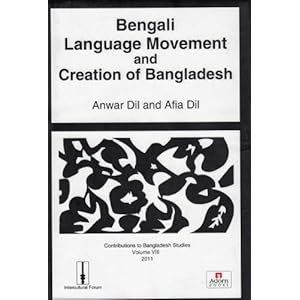 |
| This Punjabi-Bengali couple of anthropologists write from two generations of experience, so the people of Bangladesh, Pakistan and India might understand |
There is normally a strong social whip out for those questioning the evidence base for the trials, the wild charges, the master narrative of the 1971 war, and of course the political motivations of the trials. Between self-censorship, state-censorship and imprisonment we have a broadly epistemicidal regime that is also vulnerable. By epistemicidal I mean destructive of ways of knowing, and by vulnerable I mean that it is crumbling slowly. Starting from the top, the English speaking press were never going to kick up a fuss as they hate Jamat so much it blinds them, and pays them. Mir Quasem Ali of Jamat's Diganta Media group was locked up a long time ago. Newish conservative blogs like Alalodulal are silent. The Guardians Of The Liberation Narrative even had an early Al-Jazeera piece removed by intimidating their Dhaka correspondent. I guess many of the others are so deep in developmentia that this doesn't even seem to be worth the effort. Why rock the boat if you've got family and life to lead?
Alternate accounts of the politics to Bangladesh are occluded or traitorised through the very mature anti-Bangladesh jibe. Its not just in cyber macho space though, but at the heart of the academy and in polite society. Last year, a history professor in Jahangirnagar University narrowly kept his job after Awami League students and staff went ape at his inclusion of books of Sarmila Bose and Syed Sajjad Hussain on a student reading list. I know people sitting in pretty gilded cages scared to be seen reading the Bose book, so I guess something destabilising is getting in there at least.
There is another dimension to 1971 knowing that is new, and harder for the secular guardians to dismiss because of its white privilege and cultural capital. David Bergman's Bangladesh War Crimes blog is really hotting up and provides the only public transcription of the proceedings. His positionality is part of the appeal, having been involved in the 1995 War Crimes File documentary that blew a lot of wind into the sails of the Nirmul Committee by video editing a lot of their content and screening it in front of a UK audience unable to contest it. Since the kidnapping of Shukron Bali he has really gone for it, as far as interviewing his poor deserted wife.
Bir Bangali
Hiding behind a lady's sari
While Dhaka burns
Nobody shall learn.
30.11.12
Review of the Londonee at the Season of Bangla Drama
I took the opportunity to see Londonee at the Brady Centre as the Season of Bangla Drama drew to a close last Saturday. For what the RichMix holds in polished pretentiousness, the Brady Centre makes up in graft and homeliness. Increasingly, I think the two venues are entangled in my head, which must mean that somone in RichMix is making good decisions.
The play was performed by Kukul and Ghetto Tigers and directed by Gurpreet Kaur Bhatti and was on at the Rich Mix in a not too dissimilar format in May earlier this year. I was told some good things about it from someone I usually trust on these things, but underlyingly I went to see Rez Kabir, of that lungi-clad anti-Morrissey rant down Brick Lane fame. I might also have been curious as to how they played with the transnational identity invoked by the word Londonee.
 The story follows a rather deviant angel's intervention in the life of a troubled young man from east London and his sister. The angel Manush is conceived in a strange christo-hindic-pythonesque frame, plagued by the bureaocracy of the Council of Angels, and saved by being performed Rez doing the baul/vagrant thing with it. You would get me turning up to any play with him whirling around in a lungi and punjabi being loud.
See Manush used to be human and was taken ahead of his time, and he was a Bangladeshi Freedom fighter to boot, a commonality with our troubled young man's errant father who never fully recovered from the horrors of war and ran off when his mother died. Our young man, who is also called Rez is musical and like every bengali badboy must have behavioural issues. He looks after his younger sister, a conciencious kabadi player. Cue East London vs Southall contrivances and good music.
The play tells us how far we have come from the mid 90s Goodness Gracious I Bent It Like Beckham era, when Asian Cultural Product all felt like this (not you Nitin Sawnhey xx). Wanting for political symbolism, like Colours of Hope, as well as the otherwordly reach of Bonbibi, I was trapped in a time machine with good acting. This was until I understood that the writer, of more western Indian ancestry, drew from her experience touring desh in the mid 90s with a theatre troupe. there was an interesting section of writing towards the end that lifted it for me, when Manush talks along the lines of "the man without history is nowhere, but the man who knows and has made peace with his history and acts as if it isnt there is a giant".
 I am not a theatre person, I once met a theatre person. The result was that I would look into it more in my 30s. Watching these three plays in such a community incubator is the start of that iA. I am gutted to have missed the Tagore production in the season, which is meant to have been pretty deep and well performed. It is online so I'll post it here when I get hold of the link
The play was performed by Kukul and Ghetto Tigers and directed by Gurpreet Kaur Bhatti and was on at the Rich Mix in a not too dissimilar format in May earlier this year. I was told some good things about it from someone I usually trust on these things, but underlyingly I went to see Rez Kabir, of that lungi-clad anti-Morrissey rant down Brick Lane fame. I might also have been curious as to how they played with the transnational identity invoked by the word Londonee.
 The story follows a rather deviant angel's intervention in the life of a troubled young man from east London and his sister. The angel Manush is conceived in a strange christo-hindic-pythonesque frame, plagued by the bureaocracy of the Council of Angels, and saved by being performed Rez doing the baul/vagrant thing with it. You would get me turning up to any play with him whirling around in a lungi and punjabi being loud.
The play tells us how far we have come from the mid 90s Goodness Gracious I Bent It Like Beckham era, when Asian Cultural Product all felt like this (not you Nitin Sawnhey xx). Wanting for political symbolism, like Colours of Hope, as well as the otherwordly reach of Bonbibi, I was trapped in a time machine with good acting. This was until I understood that the writer, of more western Indian ancestry, drew from her experience touring desh in the mid 90s with a theatre troupe. there was an interesting section of writing towards the end that lifted it for me, when Manush talks along the lines of "the man without history is nowhere, but the man who knows and has made peace with his history and acts as if it isnt there is a giant".
Check it.
 I am not a theatre person, I once met a theatre person. The result was that I would look into it more in my 30s. Watching these three plays in such a community incubator is the start of that iA. I am gutted to have missed the Tagore production in the season, which is meant to have been pretty deep and well performed. It is online so I'll post it here when I get hold of the link
Beyond the cartoon characters, there is a moment in the play when both Rez's confront eachother, the younger human calls the angel out on his liberation war hero identity, using his post liberation scenario as evidence of the former's economy with the truth.
This would have been an interesting tension to complicate with dirty multidirectional truth of violence. What would happen if we stuck a freedom fighter benefit seeker in there, or a razakar fighter who acted with justice and humanity?
Now I would like to take this opportunity to share with you this picture of the wall in the lobby outside.
26.11.12
[New Word] Statestical
The dominant form of nonsensemaking in our age, where numbers are harvested for government and corporate benefit as part of patriarchal epistemicidal neoliberal capitalism
24.11.12
The Coming of the COP: International Climate Negotiations come to Qatar

It will render millions of homes, jobs and dreams obsolete, exacerbate existing political sores and bring us many more. Asia and Africa will be royally screwed. Towns and cities will migrate, consultants will make money, communities will be pauperised, NGOs will make money.
For 12 days from this coming Monday, the United Nation's annual Climate Change Conference, the Conference of the Parties (or COP) will unfold in Qatar. Science will be bandied around. Awards will be brandied around. And we the sons, daughters and khalifas of this brown soil might harp on about the actual intellectual and ecological values of our sacred tradition.
The countries of the world will congregate for the 18th time, polluting and endangered, scientifically creative and consumptive, politically and public relations invested. They will be joined by corporate NGOs, businesses and the other usual suspects.
 Qatar is an interesting place for a COP for a few reasons. On Al Jazeera's doorstep coverage of it is potentially different in kind from other such meetings, which are dominated by the industrialised polluting nations and their post-industrial guilt laden, but more or less eurocentric environmental NGOs. Though post-Wadah Khanfar Al Jazeera very much follows a pro secular editorial policy overseen by the Qatari royal family, their coverage is likely ( I hope) to deepen and wider participation in the climate conversation.
This small fossil fuel rich state in the Middle East is increasingly investing in science, foreign policy adventures and losing its status as the highest per capita carbon emitter. Pretty much every major western university has representation there. Post-Syria crisis they appear to be buying out Iran's political stake in Gaza, and the Qatar Investment Authority seems to be allocating finance towards renewables manufacture and appliance.
From a Londonistani point of view, there are a lot of Pakistani technocrats working working in Qatar, happy to live with the racial/class ordering and deculturation, so long as the money's good, life is safe and the Islamic frostings are there. Football fans, a community to which I do not belong, might also see this international event through their 2022 World Cup goggles.
Substance-wise, I do not think it likely that neoliberal imperialist, invader, polluter nations will chose to lose their competitive edge and pledge the binding deep cuts needed to mitigate hideous climate weirdness. The UK government have demonstrated that they cant even be bothered to maintain Labours Climate charade, Obomber's solution probably involves selling futures options on drones that will kill climate refugees (thereby mitigating any impacts of climate change on the good american people).
There maybe quite a few co-options of vulnerable countries through Adaptation Hush Money, that is funds from a polluter to an endangered government in exchange for other services rendered and the right to pollute further. Who knows? the devils really are in all the details.
The summit is easy to follow online if your are so inclined.
For fellow decolonial futurists and friends of the politics of life (not death) I recommend keeping an eye on the Bolivian and Equadorian delegations who stress the Nature Rights approach and Pablo Solon the ex Bolivian negotiator now at Focus on the Global South. Also be mindful of the sheer skull duggery of climate commodification and the G77 group of developing countries.
20.11.12
Review of Colours of Hope, another part of the Season of Bangla Drama

Last Friday was my second opportunity to taste some of Tower Hamlets Art's Season of Bangla Theatre. Behind Colours of Hope was an outfit called The Rokeyya Project, which I remember hearing from several years ago at a Brick Lane Circle conference.
What the play does is run two parallel female struggles together. We hear of the story of Asha in British occupied Kolkata struggling to attend Begum Rokeyya's school, and a young domestic worker in pre war England making contact with a suffragette moved by Emily Pankhurst.
Asha's scenario it marked by resistance to a husband-centred life trajectory at odds with a formal education beyond reading and writing her name. Bored with endless marriage talk form her elder sister alterity comes in the shape of a newspaper advert for students for a new school for Muslim girls in her city. The Sakhawat Memorial High School for girls was established in Kolkata by Begum Rokeyya with funds left by her deceased husband who supported her own foray into education. Much of Rokeyya's life from this point is marked by institutional struggle, and the educated women of South Asia who know thier chops generally tend to revere her. There is even a class of Bengali Muslim lady that builds cultural capital through their connections to her, her school and her family. That us Londoni's are just beginning to wake up and smell the appropriated coffee while we dance around in our NGOs is a crying shame.
Lady gender justice intervenes in Freya's world as she hears of the death of Emily Davidson under the King George V's horse during the 1913 Epsom Derby. "Votes for women" before being trampled underfoot, much to the annoyance of the powered classes. Yet the tribute was enormous with six thousand women followed the coffin of this great Shadeeda-e-Millat.
Asha's scenario chafes badly today. Her education is seen as instrumental to a marriage trajectory, women who do not fit such a model are made to feel less of a commodity and aged out of a marriage market. As a last resort she hopes for an understanding husband as her family exploit the temporary closure of her school on grounds of 'safety'. Sound familiar?
 The Asha storyline sometimes borders on unbelievable, even considering that the past is a different country. We are narrated a bone shaking account of a respectable Indian Muslim lady tripping up onto a railway track and being run over by a train. The headjar is that when men went to pull her up but it is said that her maid refused aid saying that 'she must remain pure'. It sounds a bit daily maily for me but I would like to chase it up.
There is a wonderful piece of dialogue lifted from Sultana's Dream that makes it into the script in the form of a classroom scene about the flipped gender positions in Rokeyya's Ladyland.
'It is not likely that they would surrender their free and open air life of their own accord and confine themselves within the four walls of the zenana! They must have been overpowered.'
'Yes, they have been!'
'By whom? By some lady-warriors, I suppose?'
'No, not by arms.'
'Yes, it cannot be so. Men's arms are stronger than women's. Then?'
'By brain.'
'Even their brains are bigger and heavier than women's. Are they not?'
'Yes, but what of that? An elephant also has got a bigger and heavier brain than a man has. Yet man can enchain elephants and employ them, according to their own wishes.'
'Well said, but tell me please, how it all actually happened. I am dying to know it!'
'Women's brains are somewhat quicker than men's. Ten years ago, when the military officers called our scientific discoveries "a sentimental nightmare," some of the young ladies wanted to say something in reply to those remarks. But both the Lady Principals restrained them and said, they should reply not by word, but by deed, if ever they got the opportunity. And they had not long to wait for that opportunity.'
'How marvelous!' I heartily clapped my hands. 'And now the proud gentlemen are dreaming sentimental dreams themselves.'
Another treat was Dillemmas of our Daughter's Dance Off where broom was pitted against book and khathak ranged against capoiera. Must have been fun to make up.
Every group is on a journey through the materials and makes decisions about where the audience is likely to be with the issues handles. A few things jarred with me as the play tried to draw itself to a close and connect to the oppressive present, and I am challenged here to express why.
Our actresses narrate the events of our character's lives, giving us a picture of the the worldviews being voiced here. As we follow Emily Pankhurst, not the more interesting anti-war, anti-imperialist and socialist Sylvia, we learn that it was through their Loyal Service To The Nation in the waste of life that was the First War of European Folly, that women earned the right to vote and then the equal right to vote.
Asha's story closes off with an all too brief life sketch of Rokeyya, her Battle to keep the school going, establishment of an Islamic Women's Association and an underpinning of Quranic teachings. I say too brief unfairly because I am so thirsty to learn more about her. This was a valuable way to present such an Epistemic reference point, to a community so often run down and accused of passiveness in the face of patriarchy. (sorry)
The howler for me was in the subsequent heroines of the present day roll call and the presence of Aung San Suu Kyi (ASSK) in that list. I asked the crew whether the Rohingya Muslims of Myanmar might see her in the same way and I'm quite sure that they didn't even know who the Rohingya were.
Our actress picked an interesting ASSK quote that I guess must have caught up with her as she does her best to avoid addressing the most racist and inhumane face of Myanmarese society that cries out for states(wo)manship today.
On a positive note, and there were many, the expansive musical score worked well and we were treated to a QnA featuring Shaheen Westcomb, one of the first female architects of Bangladesh, whose mother was a direct student of Rokeyya. It was at this point that i was made aware that I had missed all of the shadow puppetry going on on the left of the stage.“It is not power that corrupts but fear. Fear of losing power corrupts those who wield it and fear of the scourge of power corrupts those who are subject to it.”
I liked the play, it got the juices flowing and annoyed me. It drew a diverse crowd. Last week's Bonbibi made me more breathless, but the source material of Colours of Hope marked this evening's proceedings out. It was an insightful interweaving of two legendary struggles for gender justice that left us itching to know more.
To conclude, Sultana's Dream (1905) is a must read.
You can read it on the way to work on your smartphone
You can read it to your child before bedtime
You can read it to your father after dinner
You can read it to your primary school class
You can read it in your degree.
You can read it over the phone to your dearest.
Subscribe to:
Posts (Atom)