Showing posts with label alternatives. Show all posts

22.7.13

What's next with Jamaat e Islami Bangladesh?

It is a challenging time for political Islam generally these days, with the coup in Egypt, #Occupygezi in Turkey and the continuing annihilation policy against Jamaat e Islamic in Bangladesh. Internal shortcomings and external forcings have contributed to this situation and the levels of hate-mongering seem only to grow with every social media fuelled moment.

In Bangladesh the conduct of the War Crimes Tribunals, the wildness and idiocy of much of the Shahbag, the detention and torture of Amardesh editor Mahmudur Rahman and the slaughter of the non-Jamaati protest group Hefazat e Islam are a pretty depressing state of affairs.

Furthermore, the organisational decapitation of JI seems, to this observer, to have served to lobotomise and entrench defensive thinking and disarray. But its not as if other paths haven't been imagined.

Two years ago, Shah Abdul Halim, a challenging voice within the diverse internal party debate, wrote this piece on the formation of a political party. Its worth reading and highlighting the following points.

  • Binning centralised authority
  • Making good on commitments to social justice.
  • The dead end of the fiqh-as-policy approach.
  • Rejecting the control freakery of leadership panels.
  • Delinking Shibir from JI control
  • Rejection of the cadre system
  • Mitigating against the self interests of whole-timers
  • Greater honouring of women, ditching of the segregationist fascination and veil fetish.
Times of relentless attack are difficult to transform towards, as conservative survival tendencies have been seen to dominate. I am not a member of the organisation or any of its fronts but wish non secular political subjectivities and values to flourish. Hence the interest in this time being fruitful. Personally I'm more into kamrangas than tetuls, or the corrolla phlegminists that dominate our very uncivil civil society in desh.
Kamranga is a tangy fruit found in Bangladesh and many other places. Often written off as a peasants fruit and therefore inexpensive, it is good for the skin and bones, and when slices reveals a stellar quality

The rise of Hefazot, quite broad admiration/sympathy yet frustration with their disinterest in power is interesting to dwell on. 

My favourite deshi blogger Mukti has gone into purdah these days, I miss his insight and humanity, and Bloggerganj is poorer without it. He shared these observations, a while back.

As for the developments in the rest of the Muslim world, the point is not that Turkish or Arab or Indonesian politicians are going around being Zia-shoinik. Rather, when Islam-based politicians want to seriously contemplate politics beyond Hudood acts and the illegitimacy of anal sex, they arrive at the kind of synthesis that Zia articulated three decades ago.
In Bangladesh, people who talk about Islamic governance do not talk about social justice. Jamaat has spent 40 years trying to regain their 1970 position. Their biggest so-called alim, Delwar Hossain Sayedee, delivers sermons that are little better than soft-porn. All the others — Islami Oikko Jote and Khilafat Andolon and such like — talk about either declaring XYZ kafir or making sure that women stay indoors. Social justice? I don’t think so.
Maqasid orientated policy explorations anybody?
***
Its not that there aren't individuals seeking these alternate futures in the organisation, but that they are politically unweighty and effectively gagged by rules, regulations and methods that offer them no leadership or tone-defining scope.

The post Bangladesh Maududian engine does not run on hydrogen cells

***
Jamaat e Islam are not the be all and the end all of Islamisms and mIslamisms in Bangladesh, but they constitute a significant Ummahstructure. The self dubbing as the only correct Islamic option confuses us all and sends the wrong signals the millions of awesome people outside their organisation and sympathisers.

***

Some ideas that are doing the rounds and some which are not, for the Manifesto:

  • Reform and expand the War Crimes Tribunals to include all participants and histories at an International level.
  • Campaign against the commodification and inverted practices of dowryism with gusto.
  • Consult widely on a moratorium on international 'development' aid.
  • Commit to meritocracy.
  • Venture beyond Neoliberalistan and Bismillah Capitalism
  • Learn to work in partnership with diverse actors without dominating them.
  • Take an evidenced approach to make justice for the bereaved of Motijheel and other smaller brutalities.
  • Ease off the simpleton model of Nasticness and Cold war attitudes to all forms of socialism.
  • Vacate the space and work with the people as they are.
  • Do what Shah Abdul Halim said?
  • Do what Kamaruzzaman said in his letter?

11.3.13

[New Word] Political load-shedding

The troublesome process of contesting power (re)distribution. Although better timetabled these days, the hartal, or strike, causes problems for the public, which in addition to their existing problems is not the politics of mercy.

By mixing metaphors we avoid depoliticizing strikes, their need, and their impacts on people, power structures and pauperisation.

Political load-shedding is a non-solution to the problem of sustainable and just power generation and distribution.

So if you think that you, or your tribe, have what it takes to lead the people. Find another way. Don't (mis)lead dedicated young people to their martyrdom, bring sakina, or tranquility, to the streets and lives of the people.

As The Tailor once said, the prison has escape encoded in its very bars.

7.12.12

War Crimes Tribunal Judge tells the Economist to stick-em-up: Some context

So why is the Economist of London being summoned by a Bangladeshi court and ordered to embargo an article about (in)Justice Nizamul Huq of the War Crimes Tribunal's involvement with a known and ideological genocide activist?

  • How much more embarrassing can this get?
  • What does it take to get a fair hearing these days? 
  • Will we ever know that which we don't and want concerning 1971?
  • Even if this were a WikiLeak scale revelation,  would there me much public outcry in Bangladesh, where human rights activists only act selectively in defence of their leaders and territory?
  • Is (in)Justice Nizamul Huq trying to buy time so he can judicially assassinate the accused before publication?
  • How might I explore this area without feeding the monster of White Privilege?

TribunalGate 101: Made up on so many levels

Delwar Hussain Sayeedi is a political threat to the Awami League.
He can motivate a crowd of people like none of their leaders.
In fact the post-harvest waaz audience really misses him.
He sports probably the reddest mendhi beard in the Ummah.
Anticipate Jionists in the UK to play the preacher-of-hate-card.
It is difficult to know where to start to explain the retardedness of the War Crimes Tribunal as it looks set to make its guilty verdict of the exMP Pirojpur-1 and popular religious orator Delwar Hussain Sayeedi official.  The judges of the tribunal have allowed a prosecution-turned defence witness to be abducted from under their noses without proper investigation, they have allowed the prosecution to mislead the tribunal about witnesses being unavailable when they were in government safe houses. 

Needless to say (in)Justice Nizamul Huq refused to politely stand down
when a senior opposition leader said that his involvement with the
Nirmul Committee meant he could not be neutral and unbiased.
Following what I can, it seems that the judges have put unfair obstacle after unfair obstacle before the defence and let the prosecution get away with murder.  If this were any other trial, the defence would have won a few times over.  And for the record, we still do not know anything new about the operation of the Razakars and Jamat during the war year. 

The defence team is led by Barrister Abdur Razak, who appears to be discharging his duties well in trying circumstances, whilst his staff and set up are being harassed and party members disappeared.  By the end of this, he will have earned a great deal of esteem, which is not something that can be said of Justice Nizamul Huq, the desperate students of Shibir, as well as the secularist establishment.

However this is a trial about war crimes committed during the 1971 Bangladesh War, and as any 'rightminded' person would know, any member of the Jamat-e-Islami Party is a priori guilty as portrayed in the popular demonology. For reference, their guilt was established in 1992 at a civil society (mob) tribunal organised by the Nirmul Committee, which is stocked with hardcore secularist activists like Shahriar Kabir and the grieving relatives of some of the war dead. It is with this Nirmul committee which Justice Nizamul Huq has a history and controversially, a current 'learning relationship', through Dr Ahmed Ziauddin of the Centre for Genocide Studies. This is what the Economist had gotten to know, through hacking or whistle-blowing or hagoo-throwing.

But look at our own complicity in this injustice system, over the decades we have stood as witless witnesses to the programme of a dedicated group driven mad by edited stories of sorrow, marshaled by an ideology that narrows the heart and mind, and dressed in the virtue of justice, human rights and civil society. The lack of resistance and  contestation has allowed dim witted thinking, poor evidencing and rumourising to become social habits from the decision-maker to the home-maker.

Our tragedy is being unwilling to sift the truth from falsehood, which is why Bangladesh is about to kill the one of its most rousing politicians, who apparently wasn't even in Jamaat-e-Islami during the war year in which he is alleged to have committed crimes against humanity. Sayeedi was part of Tabligh-e-Jamat, an apolitical Islamic dawah group that focus on good manners and what they believe to be accurate religious performance amongst Muslim people. Apparently, he only got involved with the party in the 1980s.

Really?

I believe this is possible, and await confirmation, because I have met a freedom fighter who was a Jamaat district-level leader, a rokon-level party member who tends his local mass graves and have some access to the non-secular internal conversation.  If you accept certain sources and possible histories as potentially valid forms of knowledge the feedback loop of quietens and you might just hear something interesting.
Image from the Bangladesh war depicting General Yahya Khan.
So far unable to get justice out of Pakistan, the proxy forces
in which some of the older Jamaat leadership were involved
act as the lightning rod for frustration. 
The Master Narrative of Bangladesh

A master narrative can be a misguiding light in making sense of an experience. Sometimes people do not get very far in their own investigations before being sucked into a powerful and compelling set of reference points that contain their own internal logics and even validation overrides. 

This is a rough sketch:

(1) Islamists opposed the Awami League even after they won the election of 1970 and the army committed excesses, how dare they think differently! 
(2) All Islamists are evil traitorous swine and the principle responsible party for 1971 atrocities and all our woes, they want to take us back to Pakistan, they killed all our intellectuals
(3) I cannot listen to their side of the story or any other information that might complicate (1) or (2)
(4) The war criminals don't deserve a fair trial, my master narrative got it all right. The government should hang them before the election, the people want the trials!


Although the master narrative of the Bangladesh war still reads 3 million Bangladeshis killed by Pakistanis and their demonic local Razakar proxies, the picture is more complex and ugly. It is essential to understand ourselves changing sides and selling out, or being cruel, brave and dignified under fierce pressure, as this is what life is made of and what today is made of. Yet knowledge, especially history is socially contorted and this distortion has harmful and deluding impacts.  Bangladesh warlore has been constructed by political parties invested in reproducing their own heroism, the country's national liberation and the other's demonisation. This is all policed by loyal patriots who love justice.

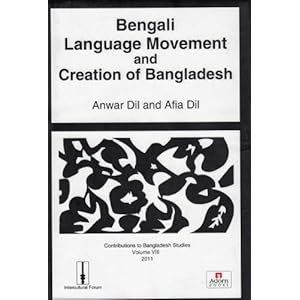
As Prof Mushtaq Khan put it, during our war 'everyone was killing everyone'. For an idea about the multi-directionality of the war and its killings see the Sarmila Bose lecture in London last year on Applying critical thinking on 1971. For more depth about our politics leading up to the war please read Afia and Anwar Dil's sober and exhaustive Bengali Language Movement  and the Creation of Bangladesh, which has recently been published in Bangladesh, ten years on.

This Punjabi-Bengali couple of anthropologists
write from two generations of experience,
so the people of Bangladesh, Pakistan and India
might understand
Bothering to know

There is normally a strong social whip out for those questioning the evidence base for the trials, the wild charges, the master narrative of the 1971 war, and of course the political motivations of the trials.  Between self-censorship, state-censorship and imprisonment we have a broadly epistemicidal regime that is also vulnerable. By epistemicidal I mean destructive of ways of knowing, and by vulnerable I mean that it is crumbling slowly. Starting from the top, the English speaking press were never going to kick up a fuss as they hate Jamat so much it blinds them, and pays them. Mir Quasem Ali of Jamat's Diganta Media group was locked up a long time ago. Newish conservative blogs like Alalodulal are silent. The Guardians Of The Liberation Narrative even had an early Al-Jazeera piece removed by intimidating their Dhaka correspondent.  I guess many of the others are so deep in developmentia that this doesn't even seem to be worth the effort. Why rock the boat if you've got family and life to lead?

Alternate accounts of the politics to Bangladesh are occluded or traitorised through the very mature anti-Bangladesh jibe. Its not just in cyber macho space though, but at the heart of the academy and in polite society. Last year, a history professor in Jahangirnagar University narrowly kept his job after Awami League students and staff went ape at his inclusion of books of Sarmila Bose and Syed Sajjad Hussain on a student reading list.  I know people sitting in pretty gilded cages scared to be seen reading the Bose book, so I guess something destabilising is getting in there at least.

There is another dimension to 1971 knowing that is new, and harder for the secular guardians to dismiss because of its white privilege and cultural capital. David Bergman's Bangladesh War Crimes blog is really hotting up and provides the only public transcription of the proceedings. His positionality is part of the appeal, having been involved in the 1995 War Crimes File documentary that blew a lot of wind into the sails of the Nirmul Committee by video editing a lot of their content and screening it in front of a UK audience unable to contest it.  Since the kidnapping of Shukron Bali he has really gone for it, as far as interviewing his poor deserted wife.

Bir Bangali 
Hiding behind a lady's sari
While Dhaka burns
Nobody shall learn.

13.9.12

Imagining the Superposition of Green Wavefronts

The long-time anti-war leader, psychotherapist and mother just quit the Respect Party. Its a bit sad how it came about, but its coming about isnt my focus for now. The thought of the Birmingham-based Salma Yaqoob joining the Green Party does joyous things to me. I like to speculate and project my political demands onto others, so please forgive and understand any commodifying of humans-as-my-pawns here.

The UK Green Party just elected a new leadership, choosing Australian expat Natalie Bennett as their number 1 and Dudley-based Will Duckworth as deputy leader.  On a purely regional level, there are potential synergies in the midlands. It would also contest the scary neomalthusianism that underpins several flavours of environmentalism (thats you Jonathan Porritt), the technocratic aspects of Brighton's Green-led council (allowed an 80 year old pensioner to be jailed for not paying her council tax) and might broaden the political constituency beyond the over-representation of the white middle classes.

Looking  generationally I feel the politics of Decolonisation, Alterity and Life converging. Silly little NGOs and the governmentalisation of Environment and Diversity arent really helpful in realising these political demands. Hence the image below.

Black Power, Verdant Knuckles

The Superposition of Green Wavefronts

For as long as I've been paying attention, Caroline Lucas has been a principled friend to Muslims, whether on hijab protection or the case of our dear Talha Ahsan, and interesting principled deshi candidates have stood for the party in national elections. I'm thinking of Farid Bakht for Bethnal Green and Bow and Dr Shahrar Ali for Brent. I won't forget Shahrar's rendition of If you Tolerate this then your children will be next at Bush house in protest at the BBC's evilness during the Israeli siege on Gaza.

Firm, committed, educated and of-the-future, a lot of current Green people tend to provoke accusations of over-middleclassedness. However this need not necessarily a fatal flaw.  With the Occupy and other assemblages out there, including folks like Bread and Circuses and Space Hijackers, its not like we are in a time of low inspiration and monoculture.

The Green's political values seem to include: Palestinian Freedom, Climate Justice, Civil Liberties, Deconsumerisations, Welfare, Humans as part of Nature, as well as Deimperialisation at home and abroad. It seems to be a space where we might breathe in our own skins.

But there is something still more tantalisingly nonsecular about planting our political seeds in this trough, and this relates to some of the projects you see linked to on the left. Its about realising the nonsecular political selves that we are and honouring and eco-akhlaq (practical ethics) and creative ideology of Qur'anic readings, into a politics of life.

Salma Yaqoob shifting into a green political space might enable the following to unfold more fully,

  • Transformation of our diet and food system to something more just, tayeb and nuronic.
  • Rejection of fake Muslim environmental NGOisms
  • Rejection of greenwash
  • Development of khalqi politics of ummah.
  • Derudeboyification.
  • Decoloniality
  • Farming revolution, revalourisation and localisation of food systems.
  • More Trees in and around Masjids, more Masjids in and around Trees.
  • Establishment of the politics of Tawhesion
  • Rememberance of the Garden
  • Rights of Nature laws and ethics
  • Surah Zalzalian conciousness


6.8.12

National Zakat Foundation: Establishing Zakat provision for the needy in the UK


The National Zakat Foundation (NZF) is a startlingly obvious project that nobody seems to have gotten around to so far, but around which considerable talent is organising. Last month, I spoke with Iqbal Nasim of the NZF, who had been quietly working on the project for 6 months prior to rolling out the public engagement and champion programme.

Iqbal is a Cambridge grad in his mid 20s who worked as a stockbroker before joining Mercy Mission (the NZF’s parent organisation) last year. I first met him on a trip to the World Islamic Economic Forum in Kuwait during 2008, a rather obese affair to which Tony Blair was invited to advise the Muslim national corporati. In 5 star hotels we were wastefully catered for and patronised with talks of food crises, enough said really, other than the challenge of substance over style for our generation. 

Mercy Mission which was founded by Shaykh Dr Tawfique Chowdhury in Australia extends globally and is relatively new to the UK. It describes itself as a community empowerment organisation and has built a strong reputation and volunteer base through its activities in Islamic education provision via the Al Kauthar Institute. With NZF and a philosophy of unpretentious practical partnership working, they are providing one of the more real examples of Muslim mobilisation in the UK.

The provision of Zakat for Muslims in the UK has generally been thought of as a lesser priority when compared with causes more established in the Musalmind. Many of our ancestral lands are very much still needy places. They suffer everyday violence, inept and corrupt government, structural injustices of neoliberal capitalism, developmentia, war and environmental calamity. Directing our Zakat solely their way, or towards vivid flashpoints in the ummah heartlands seemed a no brainer until relatively recently.


The Quran, His Divine Speech, continually calls us to the virtues and beauty of establishing Salah and Zakat. For reference, the eight categories of persons eligible for Zakat are detailed in Surah Taubah, Ayah 60. Zakat is the poor’s due. We do not get to slap ourselves on the back for paying it as it is not even ours. In spite of state welfare provision, which we observe the withdrawal off, there is a significant body of people in need in the UK. This ranges from newcomers who have fallen between the cracks of an increasingly shrill immigration system, to new Muslims often young and female vulnerable to exclusion.

The NZF’s bread and butter, as Iqbal puts it, is dealing with applications from people seeking Zakat assistance on a case by case basis. By analysing applicant forms submitted on their website the team make a raw financial assessment of the application and proceed from there.

“It’s not just financial,” Iqbal continues, “everybody who has a financial problem, doesn’t just have a financial problem.” This directness is significant, we are all too familiar with bureaucratic workings of organisations with narrow boxes, remits and agendas. That an organisation is this open minded and approachable to the needy is an example to us all.

In addition, the NZF is working with St Mungo’s, a homeless people’s charity, to establish refuges for Muslim women suffering domestic violence in London, Birmingham and Manchester. It is heartening to see this group neither denying nor exploiting the uglier face of our malaise, but addressing its impacts by providing solid Ummahstructure.

Against a backdrop of PREVENT funded, posture organisations vying for the policy limelight, of corporate charities with overseas focus and exploitative public relations practices, and a rapidly shrinking welfare state, the UK Muslim Millet is broadly welcoming this initiative. A few weeks ago I bumped into some city workers I had not seen in a while. Not only had they bought fully in to the NZF idea, they were speculating as to the amount of unpaid Zakat simply floating around Canary Wharf and how it might be liberated. There is growing support from scholars and community institutions for this. We pray for the protection, success, integrity and longevity of this project.

It is worth dwelling for a moment on a growing problem in the Muslim third sector, that it has begun to adopt much of the language and PR imprint of the development industry. This superficial industry tends to make dramatic, heroic claims and portray its victims in a disempowering light. It exploits human emotion, distracts from the causes of our problems and is difficult to argue against as it wears the cloak of virtue and charity. It could even be called “poverty pornography”. We need not make this mistake; resemblances to such infantilising PR schemes are not an inevitable short term consequence of ‘reaching out’ to the wider community. It is not beyond the wit of Muslims to establish and respond to a language which is reflective, grounded and soulful. ‘Poverty alleviation’ is not it.

Cultivating discerning support is a strategic asset; perhaps the NZF might see it this way as it develops its participant base further outside Muslim youth. The Zakatable community does not have the same social view as the audience of the Badman videos on YouTube. It comprises a mixed population of savvy, world weary professionals, business people and workers in all sectors, who would not mind being treated as adults.

By altering the reach of Zakat NZF has embarked on leading work, complementing our current overseas Zakat relations with a much needed contract to the needy closer to hand.

As we parted company, I suggested that we institute Khums, the Shi‘i practice of giving 20% of one’s earnings into the communal cause. Iqbal smiled, “Let’s start with 2.5% Zakat and see where that gets us”.

For a whole host of tools, from Zakat calculators to educational aids do visit www.nzf.org.uk

UPDATE (8/8/12)
Sorry to say that the relationship between the NZF and the dubious #STOPKONY2012esque #savemaryam campaign (also from Mercy Mission) needs probing. This immense imitative bumwave, alarmist and insulting of Indonesian Islamic culture undermines the credibility of what the NZF is committed to doing. 'Diasporas' mustnt be colonial.

17.11.11

Maulana Bhashani's death anniversary today


 Maulana Abdul Hamid Khan Bhashani. Born 1880, Died 1976. aka The Red Maulana

He returned to his Maker on 17th November 1976, a few months after leading the Long March in protest at the Indian Government's dastardly construction of the Farrakha Barrage on the Ganges River. He was doing this kind of thing in his 90s!!!

This was an immense display of political mojo from a gentleman who demonstrated it quite a lot and didn't get stuck in personality cults and petty bickering.

Those of us who share Sylheti ancestry tend to admire his leadership during the Assam Referendum on 1947 and against the Line System which tyrannised cultivators of the Surma Valley, as it was known then.

He embodied a Left Islamic political practise and hailed from a joint Jatra Movement-Deoband training. Interesting huh?!? Mister Jinnah didn't quite like him as he wasn't British educated and suited enough.

He stood against the Pro-US turn of the Pakistani State, and was feted by Late Chairman Mao.


His involvement in the Bangladesh War is hard to figure. He boycotted the 1970 election. The Indian government basically trapped him for its complete duration, as they couldn't trust him.

All of these facts mentioned above mark him out as someone every deshi could easily relate to, limitations and all. Alas, we the bangali musalmans and musalwomans have become seminarised, selfish, secularised and docile.

Allahummah grant him protection, mercy and high station, since you are the Knower of Subtleties, the Reckoner and the Majestic.


<iframe width="420" height="315" src="http://www.youtube.com/embed/PSjA5nsSyoE" frameborder="0" allowfullscreen>iframe>


7.11.11

Two Ummahtic launches: Shariah Bill of Rights and The Meccan Openings

These are significant points in political-legal practice and poetical expression.

The Shariah Bill of Rights was written by Imran Ahsan Khan Nyazee, a scholar from Pakistan who I find compelling and socially engaged. It is a statement of Islamic political principles arguing for the poor's inalienable Allah given right to,
  • A share in Mineral wealth
  • Produce of the Land
  • Pasturing animals and Commercial assets, amongst other things.
Please do read this piece, think about it critique/whatever and circulate in order that it become part of our space. It was released at the beginning of the year.

The Meccan Openings is a spoken work album released this Eid (mubarak) from Amir Sulaiman, an African American educator from the US, whose 'Danger' on def jam and Rebel Musik electrified us some years ago. It is free to download. There's clearly some kind of Ibn Arabic linkage occuring here.

I wonder what it is.

7.2.11

At the World Social Forum in Dakar

Have been in Senegal for about a week in the run up to the Social Forum. Incerdible place, wish you were here with us. Sufi, Social, Musical, Majical. Check this, a few nights ago I heard a band called Nuru Kane, Bai Fall  Gnawa featuring Kora AND Oud. The kora sounded like light from heaven pouring out of a rip in the sky. This land's characters have made and continue to make, great contributions to Islamic and general culture. Even the boaba trees look like they could walk up to you and give you a good old frisking! bellebellebelle.

Today was the first 'business' day of the forum and participants have come from all over. Corporate NGOs (have already bumped into CRAP) and internationalist thinktanks do feature but by far its not the NGO fair that I feared. The theme for the day was Africa and Diasporas, well reflected in the sessions and conversations that we had as well as the questions im off to lala land with.

TrustAfrica's "Culture as Weapon" was chaired/interpreted and signed with states(wo)manly awesomeness. Dr Abduoulwaye Niange especially impressed. HE'S got a DOCTORATE IN BREAK DANCE! Needless to say the political and social value of hiphop is not under estimated in the content of urban culture in this country. The discussions ranged and searched and are only beginning to sink in at the moment (Art in politics, challenges of amateur/professionalism, the culture of cooperation and conditionality, social media, BS culture, financing, relations with power/state..). To top it off, arather jubilant tunisian bromrade played us out with an oud powered song.

Following a yasser poulet lunch, conversations with a mouritian teacher, a senegerman environmental worker and a good old fashioned brain-squeeze of an autonomous artist couple we made it to the Liberation Theology run session on Borders/immigration and the right to free movement. There have been several Caravan trips here, from Bamako and other African places. These intervention/protest acts have been highlighting how Europe is outsourcing its border control to north african regimes, and how much of west africa's regional unity is paper-based and not backed up by tarmac and political-administrative enablement.

The Campus mosque is a really happy place too. Dropped the mandatorys and proceeded in the direction of some cafe touba (spicy coffee). But not before experiencing some heavy heavy Tijani (?) dhikr from one of the student halls.

Ended the night watching a Malian musical-theatrical troupe perform a fantastic production on migrant experience.

Follow the World Social Forum here.